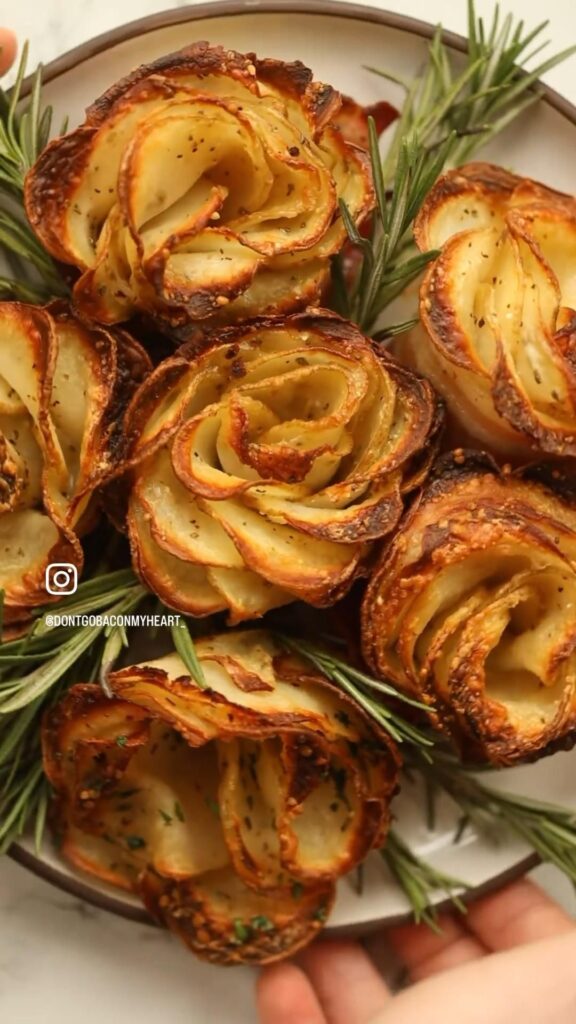
Potato Roses are the dish I stumbled onto in a tiny market stall in Marrakech, where a woman with flour-dusted hands pulled a tray of spiraled, blushing potato petals from a clay oven and handed me one still crackling at the edges. I stood there, burning my fingertips, completely undone by how something so simple could look so ceremonial.
Advertisements1
Back home, I started folding thin potato slices into muffin tins, layering butter, herbs, and a whisper of cheese so each rose holds its shape and crisps into a lacy crown. They are the kind of thing that makes a Tuesday dinner feel like a celebration, and they cost almost nothing.
This version bakes in a standard tin at 400°F, no special equipment, no pastry skills. If you can slice a potato and stack a deck of cards, you can make these. And once you do, you will never look at a bag of potatoes the same way again.
Why You'll Love This Recipe
About the Ingredients
2 1/2 pounds (1.1 kg) Yukon Gold or Russet potatoes, scrubbed
Yukon Golds hold their shape and turn creamy; Russets crisp more. Avoid waxy red potatoes, which stay firm and slice unevenly. If you only have red potatoes, parboil them 5 minutes first to soften.
6 tablespoons (85 g) unsalted butter, melted
Melted butter is the glue and the crisp-maker. Substitute with 5 tablespoons olive oil plus 1 tablespoon melted coconut oil for a dairy-free version that still browns beautifully.
1/2 cup (50 g) finely grated Parmesan or aged Gouda
A hard, salty cheese melts into the folds without turning greasy. Nutritional yeast (3 tablespoons) works for a vegan swap and adds a savory, cheesy tang.
2 cloves garlic, finely grated or pressed
Fresh garlic only; jarred garlic tastes flat and burns faster. If you are garlic-shy, swap in 1 teaspoon garlic powder stirred into the butter.
1 teaspoon fine sea salt
Fine salt dissolves into the butter; flaky salt sits on top and stays crunchy. Use 3/4 teaspoon if your cheese is very salty, like Pecorino.
1/2 teaspoon freshly cracked black pepper
Coarse cracks give little bursts of heat. White pepper is a smoother substitute if you want the roses to stay pale and uniform.
1 tablespoon fresh thyme leaves, plus more for garnish
Thyme's earthy notes love potatoes. Rosemary (1 teaspoon, minced) or 1/2 teaspoon dried oregano are excellent stand-ins; use half the amount if dried.
2 tablespoons chopped fresh chives or parsley, for finishing
Added after baking so they stay green and bright. Dill or tarragon both work if you want a more herbal, anise-like finish.
Cooking spray or extra butter, for the tin
Do not skip greasing every crevice, including the center of each cup. A pastry brush with melted butter gives the most reliable release.
Tips & Tricks
Slice Evenly or Not at All
A mandoline at 1/16-inch (1.5 mm) is the single biggest upgrade here; uneven slices mean some petals burn while others stay raw. No mandoline? Use a sharp knife and aim for the thickness of a coin.
Butter Between Every Layer
Tossing the slices in the seasoned butter before stacking is what makes the petals separate instead of fusing into a potato puck. Toss gently with your hands until every slice glistens.
Do Not Overfill the Cups
Stack only to the top rim. Overstuffed roses slump and steam instead of crisping, and they are nearly impossible to lift out in one piece.
Let Them Rest Before Unmolding
Five minutes in the tin after baking lets the starch set. Run a thin knife or small offset spatula around the edge, then lift from the base.
Pro Tips
Step-by-Step Instructions
1. Heat the Oven
Preheat the oven to 400°F (200°C) with a rack in the lower third. Grease a 12-cup standard muffin tin generously with butter or cooking spray, brushing every corner of each cup.
2. Slice the Potatoes
Slice the potatoes crosswise into 1/16-inch (1.5 mm) rounds using a mandoline or sharp knife. You should have about 8 cups of thin, translucent coins; discard the rounded end pieces or save them for soup.
3. Season the Slices
In a large bowl, whisk the melted butter, garlic, salt, pepper, and thyme. Add the potato slices and toss with your hands until every slice is coated and glossy, about 2 minutes.
4. Stack the Roses
Arrange 12 to 16 slices in a tight overlapping line, then roll the line into a spiral and stand it upright in a muffin cup. Repeat, filling all 12 cups and pressing each rose gently so it holds.
5. Top with Cheese
Sprinkle the grated Parmesan over the tops and into the crevices of each rose. The cheese should catch in the outer petals, where it will brown into crisp shards.
6. Bake Until Golden
Bake at 400°F (200°C) for 32 to 38 minutes, until the edges are deep golden brown, the centers are tender when pierced with a skewer, and the butter is bubbling around the base of each cup. If the tops brown too fast, tent loosely with foil after 25 minutes.
7. Rest and Unmold
Let the tin rest 5 minutes on a wire rack. Run a thin knife around each rose, then lift from the base with a small spatula and transfer to a platter.
8. Finish and Serve
Scatter the chives and extra thyme over the warm roses and finish with a pinch of flaky salt. Serve immediately, while the edges are still crackling.
Delicious Variations
Cacio e Pepe Roses
Swap the thyme for 1 tablespoon cracked black pepper and use Pecorino Romano instead of Parmesan for a sharp, peppery bite.
Smoked Paprika and Manchego
Add 1 teaspoon smoked paprika to the butter and use grated Manchego; the roses turn sunset-orange with a smoky finish.
Vegan Herb Roses
Use olive oil, nutritional yeast, and a pinch of miso whisked into the oil for umami; bake 2 minutes longer for the same crisp edge.
How to Store Potato Roses
Refrigerator
Store cooled roses in an airtight container for up to 4 days. They soften as they sit, so re-crisp before serving rather than eating them cold.
Freezer
Freeze baked roses on a sheet pan until solid, then transfer to a freezer bag for up to 2 months. Freeze before garnishing with fresh herbs.
Reheating
Reheat on a sheet pan at 400°F (200°C) for 8 to 10 minutes, until the edges re-crisp and the centers are hot. Avoid the microwave, which steams them into mush.
Frequently Asked Questions
Q: Why did my potato roses fall apart?
They usually fall apart because the slices were too thick or the cups were overfilled. Keep slices at 1/16 inch and stack only to the rim, pressing each spiral firmly so the petals grip one another. A 5-minute rest in the tin also helps the starch set before you lift them out.
Q: Can I make potato roses ahead of time?
Yes, assemble them up to 24 hours ahead and refrigerate the tin covered with plastic wrap. Bake straight from the fridge, adding 5 to 7 minutes to the total time, since cold potatoes take longer to crisp.
Q: Do I need a mandoline to make potato roses?
No, but a mandoline makes it far easier to get uniform 1/16-inch slices. If you are using a knife, chill the potatoes for 30 minutes first; firm potatoes slice thinner and more evenly, and parboil thicker slices for 4 minutes before assembling.
Q: What potatoes are best for potato roses?
Yukon Gold is the best all-rounder because it crisps at the edges while staying creamy inside. Russets give a lighter, more shattered crisp, while waxy red potatoes stay firm and are better parboiled first.
Q: Can I make potato roses in a cupcake liners?
Skip paper liners entirely; they trap moisture and the roses will steam instead of crisp. Grease the bare metal tin heavily, or use silicone muffin cups, which release cleanly and brown the base well.
Make these once and you will start seeing spirals in every potato you peel. Serve them alongside roast chicken, a fried egg, or nothing but a bowl of garlicky yogurt, and watch the table go quiet. Go, see, and connect.
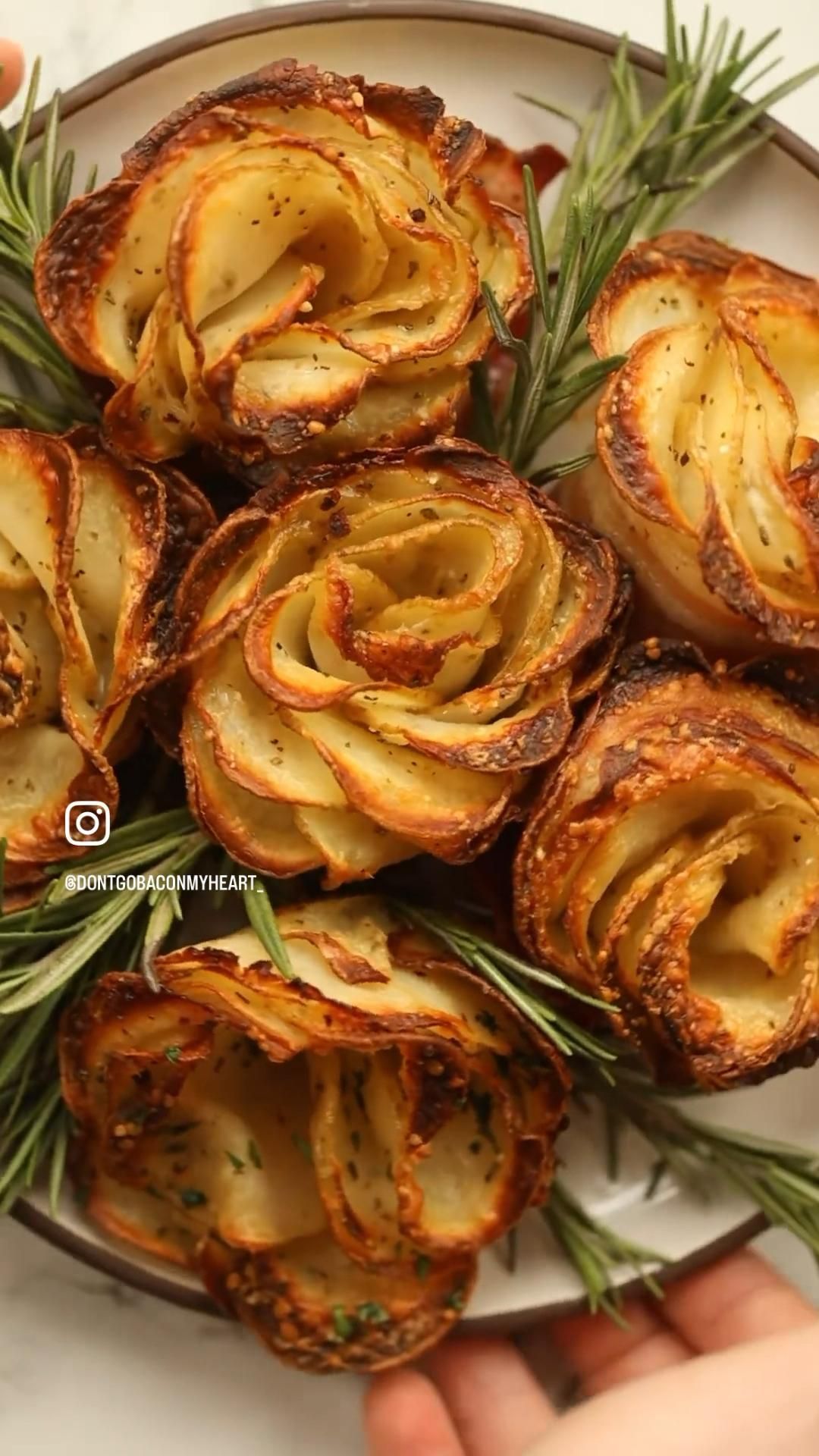
Potato Roses
Potato Roses turn humble spuds into crispy, golden swirls that look bakery-made but take just 15 minutes to assemble.
🧂 Ingredients
- 2 1/2 pounds (1.1 kg) Yukon Gold or Russet potatoes, scrubbed
- 6 tablespoons (85 g) unsalted butter, melted
- 1/2 cup (50 g) finely grated Parmesan or aged Gouda
- 2 cloves garlic, finely grated or pressed
- 1 teaspoon fine sea salt
- 1/2 teaspoon freshly cracked black pepper
- 1 tablespoon fresh thyme leaves, plus more for garnish
- 2 tablespoons chopped fresh chives or parsley, for finishing
- Cooking spray or extra butter, for the tin
📋 Instructions
- 1Heat the Oven — Preheat the oven to 400°F (200°C) with a rack in the lower third. Grease a 12-cup standard muffin tin generously with butter or cooking spray, brushing every corner of each cup.
- 2Slice the Potatoes — Slice the potatoes crosswise into 1/16-inch (1.5 mm) rounds using a mandoline or sharp knife. You should have about 8 cups of thin, translucent coins; discard the rounded end pieces or save them for soup.
- 3Season the Slices — In a large bowl, whisk the melted butter, garlic, salt, pepper, and thyme. Add the potato slices and toss with your hands until every slice is coated and glossy, about 2 minutes.
- 4Stack the Roses — Arrange 12 to 16 slices in a tight overlapping line, then roll the line into a spiral and stand it upright in a muffin cup. Repeat, filling all 12 cups and pressing each rose gently so it holds.
- 5Top with Cheese — Sprinkle the grated Parmesan over the tops and into the crevices of each rose. The cheese should catch in the outer petals, where it will brown into crisp shards.
- 6Bake Until Golden — Bake at 400°F (200°C) for 32 to 38 minutes, until the edges are deep golden brown, the centers are tender when pierced with a skewer, and the butter is bubbling around the base of each cup. If the tops brown too fast, tent loosely with foil after 25 minutes.
- 7Rest and Unmold — Let the tin rest 5 minutes on a wire rack. Run a thin knife around each rose, then lift from the base with a small spatula and transfer to a platter.
- 8Finish and Serve — Scatter the chives and extra thyme over the warm roses and finish with a pinch of flaky salt. Serve immediately, while the edges are still crackling.

Aisha writes about travel and cultural immersion, sharing stories and tips from her journeys to off-the-beaten-path destinations. She emphasizes respectful tourism, budget-friendly adventures, and the importance of connecting with local communities.