
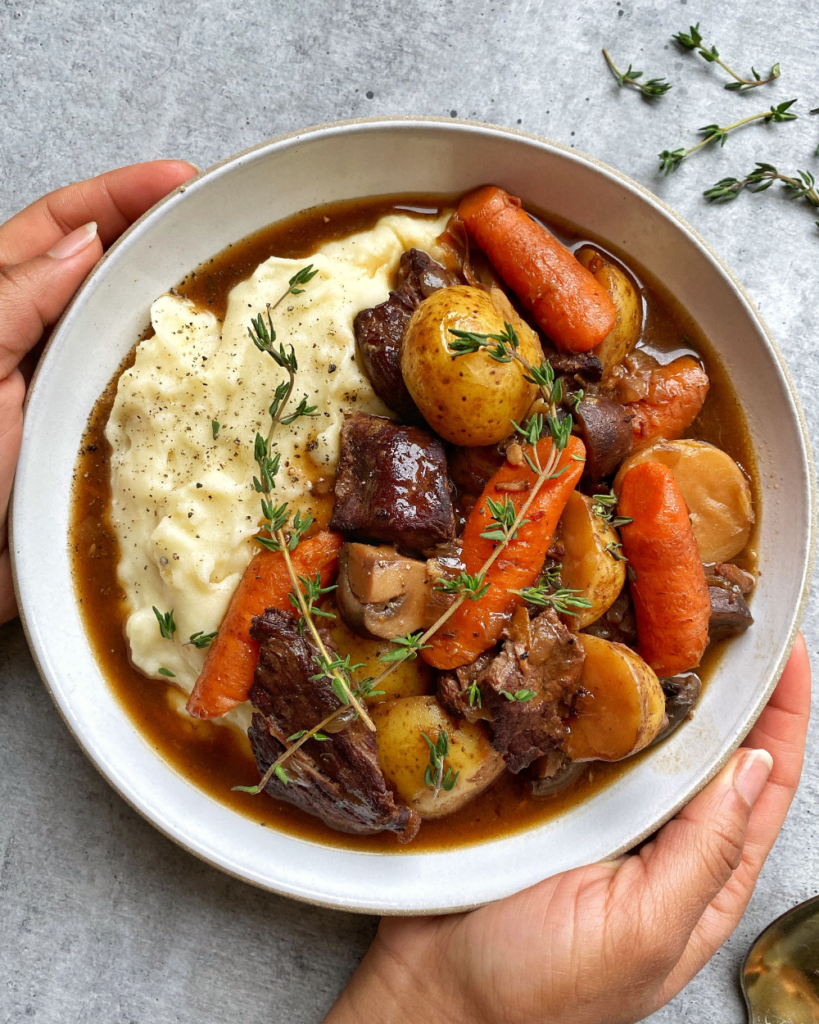
Good Eats Pot Roast is a chuck roast braised low and slow with onions, carrots, and potatoes until a fork slides through it with zero resistance. The payoff is a single pot that produces both the main course and a gravy thick enough to coat the back of a spoon.
Advertisements1
The method matters more than the ingredient list. A chuck roast is roughly 20 percent connective tissue by weight, and that collagen only converts to gelatin between 190 F and 205 F (88 C and 96 C). Cook it to 160 F (71 C) and you get a chewy roast; cook it to 200 F (93 C) and you get the texture everyone actually wants.
Total hands-on time is about 15 minutes. The oven does the remaining work, which is why this is the recipe I default to when I need a Sunday dinner that does not require me to stand at the stove.
Why You'll Love This Recipe
About the Ingredients
1 boneless beef chuck roast, 3.5 to 4 lb (1.6 to 1.8 kg), about 2 inches thick
Look for a roast with visible white marbling and no more than a quarter-inch fat cap. If chuck is unavailable, use boneless short ribs or a 4 lb (1.8 kg) bottom round roast, though round will be slightly drier.
2 teaspoons kosher salt, plus more for the vegetables
Diamond Crystal kosher salt weighs about half of Morton, so if you use Morton, cut this to 1 1/2 teaspoons. Fine sea salt works as a direct swap.
1 teaspoon freshly ground black pepper
Pre-ground pepper loses its volatile oils within a few months. Grind it fresh or the crust will taste flat and dusty.
2 tablespoons neutral oil, such as canola or grapeseed
Neutral oil has a smoke point above 400 F (204 C), which you need for a proper sear. Do not substitute butter here; it burns before the crust forms.
2 large yellow onions, about 1 lb (450 g), sliced 1/2 inch thick
Yellow onions break down into sweetness during a long braise. Sweet onions work too but will make the gravy noticeably sweeter.
4 cloves garlic, smashed and left whole
Smashed garlic releases flavor slowly and will not scorch. If you only have garlic powder, use 1 teaspoon and add it with the broth.
2 tablespoons tomato paste
Tomato paste adds glutamates that deepen the beef flavor. If you are out, substitute 2 tablespoons of ketchup and reduce the brown sugar by half.
1 cup (240 ml) dry red wine, such as Cabernet or Cotes du Rhone
Any dry red under $15 works. For an alcohol-free version, use 1 cup (240 ml) beef broth plus 1 tablespoon red wine vinegar.
2 cups (480 ml) low-sodium beef broth
Low-sodium matters because the liquid reduces by roughly a third. If you only have regular broth, omit the added salt on the vegetables.
1 tablespoon Worcestershire sauce
Worcestershire adds anchovy-based umami. Soy sauce or coconut aminos are direct substitutes at the same quantity.
1.5 lb (680 g) small Yukon Gold potatoes, halved if larger than 2 inches
Yukon Golds hold their shape better than russets in a long braise. Red potatoes also work; avoid baking potatoes, which turn to mush.
1 lb (450 g) carrots, peeled and cut into 2-inch lengths
Whole carrots beat baby carrots, which are machined and absorb liquid faster. If using baby carrots, add them 30 minutes later than the recipe states.
Tips & Tricks
Do Not Skip The Rest
Let the roast sit in the braising liquid for 20 minutes before slicing. Cutting it hot releases juices onto the cutting board instead of keeping them in the meat.
Sear Dry, Sear Hard
Pat the roast completely dry with paper towels and let it sit at room temperature for 30 minutes. Surface moisture steams instead of browning, and you lose the Maillard crust that gives the gravy its color.
Check The Temperature, Not The Clock
Pull the roast when a thermometer in the thickest part reads 200 F to 205 F (93 C to 96 C). Oven calibration varies by 25 F (14 C), so time alone is unreliable.
Salt The Night Before If You Can
Salting the roast 12 to 24 hours ahead and leaving it uncovered in the refrigerator seasons the interior and dries the surface for a better sear.
Pro Tips
Step-by-Step Instructions
1. Dry And Season
Pat the roast dry with paper towels and season all sides with 2 teaspoons kosher salt and 1 teaspoon black pepper. Let it sit at room temperature for 30 minutes while you preheat the oven to 325 F (163 C).
2. Sear The Roast
Heat 2 tablespoons oil in a Dutch oven over medium-high heat until it shimmers, about 2 minutes. Sear the roast 4 to 5 minutes per side until deeply browned and the crust releases easily from the pan, about 10 minutes total. Transfer to a plate.
3. Soften The Onions
Reduce heat to medium and add the sliced onions with a pinch of salt. Cook 6 to 8 minutes, stirring occasionally, until softened and lightly golden at the edges. Add the smashed garlic and cook 1 minute until fragrant.
4. Bloom The Tomato Paste
Push the onions aside and add 2 tablespoons tomato paste to the center of the pan. Cook 60 to 90 seconds, stirring, until it darkens to a brick red and smells sweet rather than raw.
5. Deglaze And Build The Liquid
Pour in 1 cup red wine and scrape the browned bits off the bottom with a wooden spoon, simmering 3 to 4 minutes until the wine reduces by half. Stir in 2 cups beef broth and 1 tablespoon Worcestershire sauce.
6. Braise Covered
Return the roast and any accumulated juices to the pot. Cover and transfer to the oven. Braise 2 hours 30 minutes, then check the internal temperature; it should read 195 F to 200 F (91 C to 93 C).
7. Add The Vegetables
Nestle 1.5 lb halved potatoes and 1 lb carrots around the roast, spooning some liquid over them. Cover and return to the oven for 45 to 60 minutes, until the carrots pierce easily with a knife and the roast reads 205 F (96 C).
8. Rest And Slice
Transfer the roast to a cutting board and tent loosely with foil for 20 minutes. Meanwhile, skim the fat from the liquid and simmer it 8 to 10 minutes until it coats a spoon. Slice the roast against the grain and serve with the vegetables and gravy.
Delicious Variations
Slow Cooker Version
Sear the roast and onions on the stove, then transfer everything except the potatoes and carrots to a 6-quart slow cooker. Cook on low 7 hours, add the vegetables, and cook 2 more hours.
Mushroom And Red Wine
Add 8 oz (225 g) quartered cremini mushrooms with the onions and increase the wine to 1.5 cups (360 ml). The mushrooms add body to the gravy and cut the beef flavor slightly.
Asian Braised Variation
Replace the wine with 1 cup (240 ml) beef broth, add 3 tablespoons soy sauce, 2 tablespoons brown sugar, and a 1-inch piece of ginger. Skip the Worcestershire and finish with sliced scallions.
How to Store Good Eats Pot Roast
Refrigerator
Store the sliced roast, vegetables, and gravy together in an airtight container for up to 4 days. The flavor improves after 24 hours as the meat reabsorbs the seasoned liquid.
Freezer
Freeze the roast and gravy in a freezer-safe container for up to 3 months. Leave 1 inch of headspace, since liquid expands during freezing. Potatoes turn grainy after freezing, so add fresh ones when reheating.
Reheating
Reheat covered in a 300 F (149 C) oven for 25 to 30 minutes, or in a saucepan over medium-low heat for 10 minutes. Add a splash of broth if the gravy has thickened too much.
Frequently Asked Questions
Q: What is the best cut of beef for pot roast?
Chuck roast is the best cut because its heavy marbling and connective tissue break down into gelatin during a long braise. Bottom round and brisket also work but produce a drier result. Avoid lean cuts like sirloin, which turn tough when cooked past medium.
Q: How long should I cook a 4-pound pot roast?
Plan on 3 to 3.5 hours total at 325 F (163 C) for a 4-pound roast, with the vegetables added in the last 45 to 60 minutes. The reliable signal is internal temperature, not time: pull it at 200 F to 205 F (93 C to 96 C).
Q: Why did my pot roast turn out dry and tough?
It was almost certainly undercooked, not overcooked. Collagen needs sustained heat above 190 F (88 C) to dissolve, so a roast pulled at 160 F (71 C) will be chewy no matter how long it rested. Return it to the oven until it reaches 200 F (93 C).
Q: Can I make pot roast without wine?
Yes. Substitute an equal volume of beef broth plus 1 tablespoon red wine vinegar, or use 1 cup (240 ml) unsweetened apple juice for a slightly sweeter gravy. The wine adds acidity and depth, so replace at least some of that with an acid.
Q: Do I have to sear the roast first?
Searing is not required for tenderness, but it is required for flavor. The browned crust contributes hundreds of flavor compounds to the gravy through the Maillard reaction. Skipping it costs you roughly 10 minutes and a noticeably thinner-tasting sauce.
Start this roast on a Saturday afternoon and you will have Sunday dinner plus two days of leftovers that taste better than the first serving. Buy a chuck roast with visible marbling, salt it the night before, and trust the thermometer over the clock. Keep it simple, keep it growing.
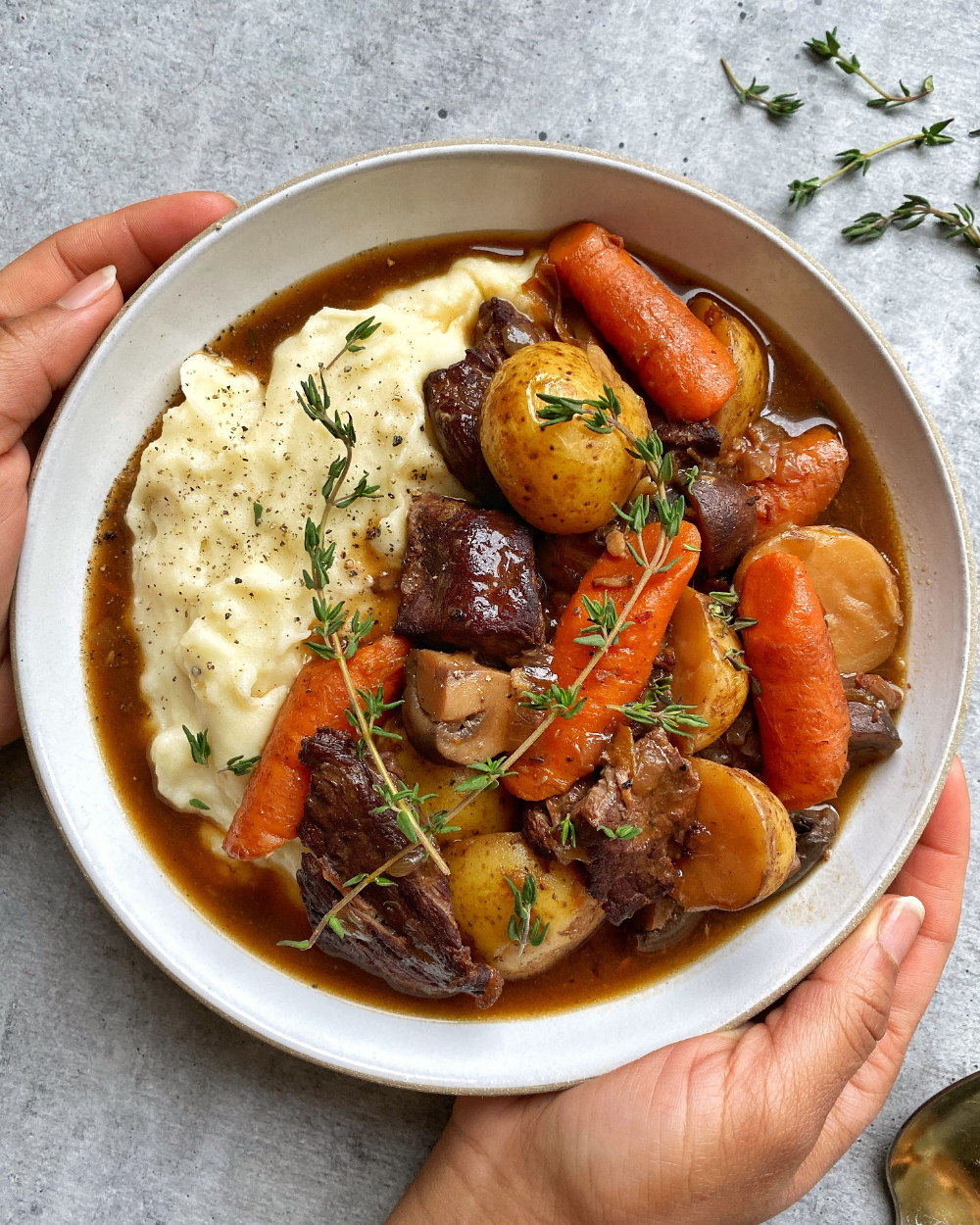
Good Eats Pot Roast
Good Eats Pot Roast delivers fork-tender chuck roast with carrots and potatoes in a rich onion gravy, all braised in one pot with almost no hands-on work.
🧂 Ingredients
- 1 boneless beef chuck roast, 3.5 to 4 lb (1.6 to 1.8 kg), about 2 inches thick
- 2 teaspoons kosher salt, plus more for the vegetables
- 1 teaspoon freshly ground black pepper
- 2 tablespoons neutral oil, such as canola or grapeseed
- 2 large yellow onions, about 1 lb (450 g), sliced 1/2 inch thick
- 4 cloves garlic, smashed and left whole
- 2 tablespoons tomato paste
- 1 cup (240 ml) dry red wine, such as Cabernet or Cotes du Rhone
- 2 cups (480 ml) low-sodium beef broth
- 1 tablespoon Worcestershire sauce
- 1.5 lb (680 g) small Yukon Gold potatoes, halved if larger than 2 inches
- 1 lb (450 g) carrots, peeled and cut into 2-inch lengths
📋 Instructions
- 1Dry And Season — Pat the roast dry with paper towels and season all sides with 2 teaspoons kosher salt and 1 teaspoon black pepper. Let it sit at room temperature for 30 minutes while you preheat the oven to 325 F (163 C).
- 2Sear The Roast — Heat 2 tablespoons oil in a Dutch oven over medium-high heat until it shimmers, about 2 minutes. Sear the roast 4 to 5 minutes per side until deeply browned and the crust releases easily from the pan, about 10 minutes total. Transfer to a plate.
- 3Soften The Onions — Reduce heat to medium and add the sliced onions with a pinch of salt. Cook 6 to 8 minutes, stirring occasionally, until softened and lightly golden at the edges. Add the smashed garlic and cook 1 minute until fragrant.
- 4Bloom The Tomato Paste — Push the onions aside and add 2 tablespoons tomato paste to the center of the pan. Cook 60 to 90 seconds, stirring, until it darkens to a brick red and smells sweet rather than raw.
- 5Deglaze And Build The Liquid — Pour in 1 cup red wine and scrape the browned bits off the bottom with a wooden spoon, simmering 3 to 4 minutes until the wine reduces by half. Stir in 2 cups beef broth and 1 tablespoon Worcestershire sauce.
- 6Braise Covered — Return the roast and any accumulated juices to the pot. Cover and transfer to the oven. Braise 2 hours 30 minutes, then check the internal temperature; it should read 195 F to 200 F (91 C to 93 C).
- 7Add The Vegetables — Nestle 1.5 lb halved potatoes and 1 lb carrots around the roast, spooning some liquid over them. Cover and return to the oven for 45 to 60 minutes, until the carrots pierce easily with a knife and the roast reads 205 F (96 C).
- 8Rest And Slice — Transfer the roast to a cutting board and tent loosely with foil for 20 minutes. Meanwhile, skim the fat from the liquid and simmer it 8 to 10 minutes until it coats a spoon. Slice the roast against the grain and serve with the vegetables and gravy.

Liam covers personal finance and investing for beginners, demystifying money management with clear, no-nonsense advice. He focuses on budgeting, saving, and long-term wealth building, often using real-life scenarios to illustrate concepts.