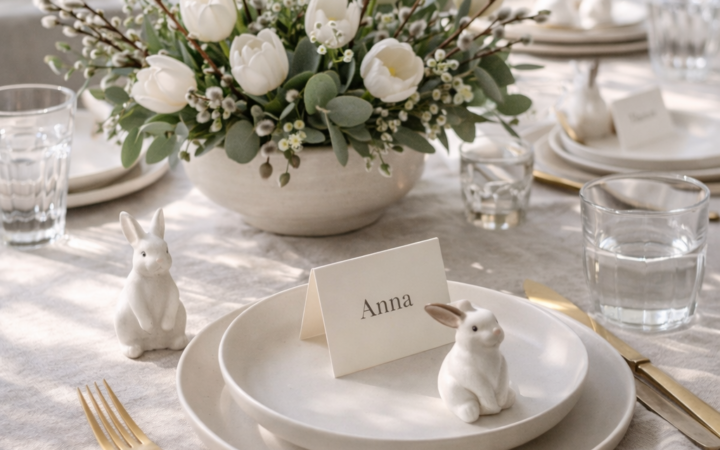
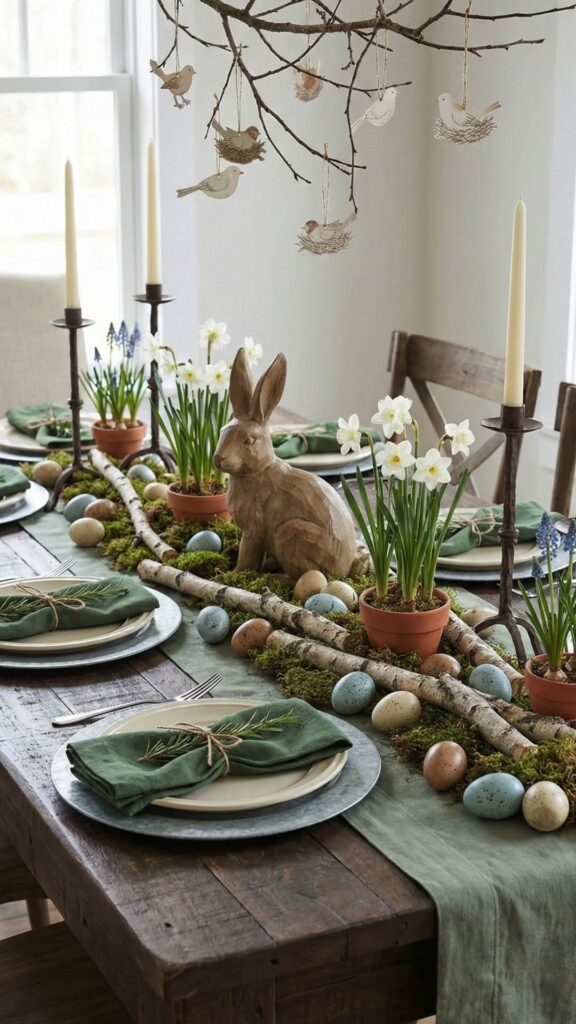
Every spring, my grandmother would send me into the garden with a pair of scissors and one instruction: bring back something alive. That is how I learned that a table is not decorated with objects, it is decorated with the season itself. This Simple & Classy Easter Dining Table Decoration is my modern version of her ritual, built from a carrot-and-herb centerpiece, dyed eggs, and a linen runner you can assemble in under an hour.
Advertisements1
The trick is layering height, scent, and color so the table looks intentional without looking expensive. You will roast a small tray of carrots and pearl onions until their edges caramelize, tuck fresh rosemary and thyme into the gaps, and let the warmth perfume the room while your guests arrive. Nothing here is glued or permanent, so you can eat the carrots, peel the eggs, and compost the stems the next morning.
Whether you are hosting a formal Easter brunch or a quiet dinner for two, this setup scales up or down without extra shopping. I have built it on hotel buffets in Marrakech and on a folding table in my own kitchen, and it earns the same compliment every time: it smells like spring.
Why You'll Love This Recipe
About the Ingredients
2 lb (900g) slim carrots, scrubbed and left whole with 1 inch of green top attached
Look for carrots no thicker than your thumb so they roast evenly and stand upright in the arrangement. If you can only find thick carrots, halve them lengthwise and reduce the roast time by 5 minutes.
1 lb (450g) pearl onions, red and white mixed, unpeeled
Unpeeled pearl onions hold their shape and their papery skins add a translucent, onion-skin glow under candlelight. Frozen pearl onions work as a substitute but will look rounder and shinier, so pat them dry first.
3 tbsp (45ml) olive oil
A fruity, cold-pressed olive oil carries the herb aroma better than a neutral oil. Avocado oil is a fine substitute if you want a higher smoke point and a milder scent.
1 tbsp (12g) flaky sea salt, plus more for the egg dye
Maldon or fleur de sel gives a visible sparkle that reads as intentional styling. Coarse kosher salt works, but it dissolves into the oil and loses the decorative contrast.
1 tsp (2g) freshly cracked black pepper
Crack it just before roasting; pre-ground pepper tastes flat and dusty within a week. A quick grind of pink peppercorns adds a floral note that pairs beautifully with the herbs.
6 large eggs, hard-boiled and cooled
Buy the oldest eggs in your fridge, since older shells peel cleanly after boiling. If you only have fresh eggs, add 1 tsp baking soda to the boiling water to loosen the membranes.
1 cup (240ml) water, plus 2 tbsp (30ml) distilled white vinegar for the dye bath
The vinegar is the mordant that helps natural color cling to the shell. Apple cider vinegar substitutes one-to-one, though it can shift red cabbage dye toward blue.
2 cups (180g) shredded red cabbage, for a natural blue-purple dye
Red cabbage produces a reliable blue that deepens overnight in the refrigerator. Beet peels make a pink substitute, but the color fades faster, so use them the same day.
1 bunch fresh rosemary, about 8 sprigs
Rosemary is the structural backbone of this centerpiece because its woody stems stand up in the carrot gaps. Thyme or bay branches substitute well if rosemary feels too piney for your table.
1 bunch fresh thyme, about 10 sprigs
Thyme fills the low gaps and releases a lemony scent when the warm carrots brush against it. Oregano or marjoram are gentler substitutes if you find thyme too earthy.
1 yard (0.9m) natural linen fabric, unhemmed, for the runner
Raw linen in oatmeal or sage reads as classy without competing with the food. A cotton tablecloth or even a clean flour-sack towel is an honest substitute if you do not want to buy fabric.
12 small unscented tea lights in glass cups
Unscented is non-negotiable, because scented candles fight the rosemary and make the food taste like perfume. Battery-operated votives are the safest substitute around children.
Tips & Tricks
Do not crowd the carrots
leave at least a finger-width between each one so they roast golden instead of steaming. Crowding is the number one reason home cooks end up with pale, limp vegetables that sag in the arrangement.
Dye the eggs the night before
natural dyes need at least 8 hours in the refrigerator to reach a deep, even tone. Eggs pulled after 30 minutes look washed out and will not photograph well on the table.
Keep the herbs dry until the last minute
wet stems wilt and turn black within an hour under warm carrots. Pat everything dry and add the thyme only after the tray has cooled for 5 minutes.
Anchor the runner with weight
unhemmed linen slides on a polished table, so place two heavy candlesticks at the corners. This also frames the centerpiece and stops guests from dragging the fabric when they reach for bread.
Pro Tips
Step-by-Step Instructions
1. Heat the oven
Preheat your oven to 425F (220C) with a rack in the middle position. A fully preheated oven is what gives the carrots their blistered, caramelized edges rather than a slow, sweaty roast.
2. Toss the vegetables
In a large bowl, toss the whole carrots and unpeeled pearl onions with the olive oil, flaky salt, and cracked pepper until every surface glistens. Spread them on a rimmed sheet pan in a single layer with space between each piece.
3. Roast until caramelized
Roast for 25 to 30 minutes at 425F (220C), turning once at the 15-minute mark. The carrots are done when the tips are deep golden brown, the onions are bubbling at their cut edges, and a knife slides into the thickest carrot with no resistance.
4. Cool and lift
Slide the pan onto a wire rack and let the vegetables cool for 5 minutes, until they are warm but comfortable to handle. Warm carrots release their aroma into the room, which is exactly what you want as guests walk in.
5. Dye the eggs
While the vegetables roast, simmer the shredded red cabbage in 1 cup water and 2 tbsp vinegar for 10 minutes at 212F (100C), then strain the liquid into a deep bowl. Submerge the hard-boiled eggs and refrigerate for at least 8 hours, or overnight, until the shells reach a soft robin's-egg blue.
6. Lay the runner
Drape the linen runner down the center of the table, letting the raw edges fall evenly on both ends. Weight each corner with a glass candle cup so the fabric stays taut and does not slide when guests reach across.
7. Build the centerpiece
Arrange the warm carrots in three loose clusters along the runner, standing some upright and laying others diagonally. Tuck the pearl onions into the gaps, then thread rosemary sprigs between the clusters so they rise like small green spires.
8. Finish with eggs and light
Nestle the dyed blue eggs in the spaces between clusters, tucking thyme sprigs around their bases. Light the tea lights, dim the overhead lights, and let the table glow for 10 minutes before guests sit down so the herbs warm and release their scent.
Delicious Variations
Mediterranean Easter Table
Swap the rosemary for oregano and add a small bowl of olive oil and za'atar for dipping the warm carrots at the table.
Persian Nowruz Spread
Replace the cabbage dye with turmeric for golden eggs, add sprouted wheat grass in small cups, and set a mirror under the centerpiece to reflect the candles.
Greek Orthodox Red Eggs
Dye the eggs with beet juice and onion skins instead of cabbage, and arrange them in a shallow bowl of bay leaves beside the carrots.
How to Store Simple & Classy Easter Dining Table Decoration
Refrigerator
Store the roasted carrots and onions in an airtight container for up to 4 days; keep the dyed eggs refrigerated for up to 1 week. Discard any herb sprigs that touched the warm vegetables after 24 hours.
Freezer
Freeze the roasted carrots and onions in a single layer for up to 3 months; do not freeze the dyed eggs, as the shells crack and the whites turn rubbery.
Reheating
Reheat the vegetables on a sheet pan at 375F (190C) for 8 to 10 minutes, until the edges sizzle again. Serve the eggs cold or at room temperature, never reheated in a microwave.
Frequently Asked Questions
Q: How do I dye Easter eggs naturally without a kit?
Simmer red cabbage in water with vinegar for 10 minutes, strain it, and soak hard-boiled eggs in the liquid overnight in the refrigerator. The vinegar acts as a mordant so the blue color bonds to the shell instead of rinsing off. Beet juice and turmeric work the same way for pink and gold.
Q: Can I make this Easter table decoration ahead of time?
Yes, dye the eggs up to 3 days ahead and roast the carrots the morning of your meal. Keep the eggs refrigerated until 30 minutes before serving, and reheat the carrots at 375F (190C) for 8 minutes so they regain their caramelized edges. The linen runner can be pressed and laid out the night before.
Q: What can I use instead of fresh rosemary for the centerpiece?
Thyme, bay branches, or even sturdy sage stems all stand up well in the carrot gaps and release a pleasant scent. If you want something taller, use bare birch twigs or dried wheat stalks, which hold their shape without water. Avoid anything with a strong perfume, like eucalyptus, because it competes with the food.
Q: Are naturally dyed eggs safe to eat?
Yes, as long as you refrigerate them during the dyeing process and use food-safe dyes like cabbage, beets, or turmeric. Do not leave eggs at room temperature for more than 2 hours, and discard any egg that floats in water. Eat dyed eggs within one week of boiling.
Q: How do I keep the table decoration from looking cluttered?
Work in odd-numbered clusters and leave visible linen between each group so the eye has somewhere to rest. Stick to three colors at most, in this case orange, blue, and green, and let the candles provide the only shine. If a piece does not add height, scent, or color, take it off the table.
Set this table once and you will understand why my grandmother sent me into the garden every spring. Gather your carrots, your cabbage, and your best linen, and let the season do the decorating for you. Go, see, and connect.
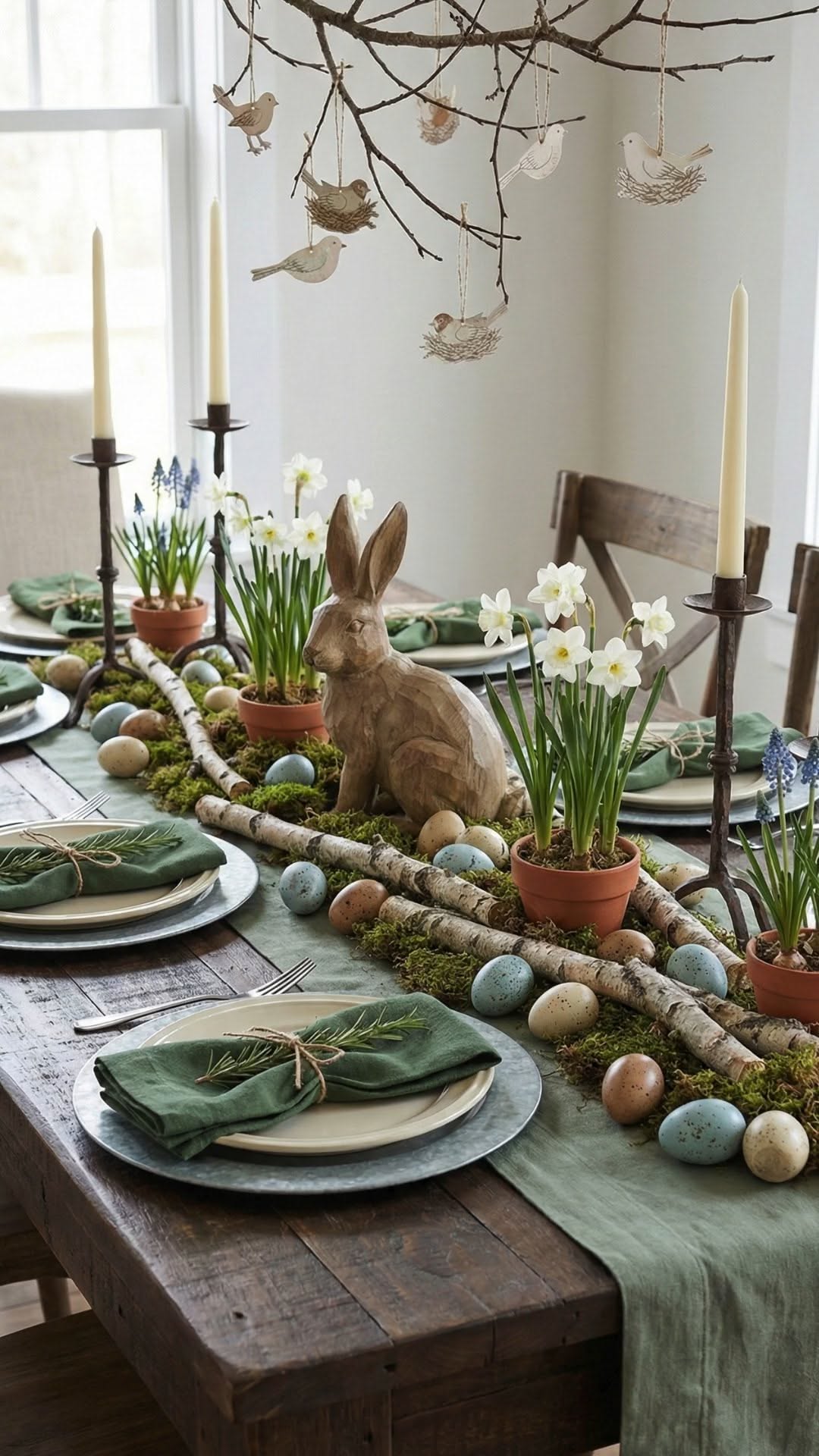
Simple & Classy Easter Dining Table Decoration
Simple & Classy Easter Dining Table Decoration turns your spring table into a fragrant, edible centerpiece guests photograph before the meal begins.
🧂 Ingredients
- 2 lb (900g) slim carrots, scrubbed and left whole with 1 inch of green top attached
- 1 lb (450g) pearl onions, red and white mixed, unpeeled
- 3 tbsp (45ml) olive oil
- 1 tbsp (12g) flaky sea salt, plus more for the egg dye
- 1 tsp (2g) freshly cracked black pepper
- 6 large eggs, hard-boiled and cooled
- 1 cup (240ml) water, plus 2 tbsp (30ml) distilled white vinegar for the dye bath
- 2 cups (180g) shredded red cabbage, for a natural blue-purple dye
- 1 bunch fresh rosemary, about 8 sprigs
- 1 bunch fresh thyme, about 10 sprigs
- 1 yard (0.9m) natural linen fabric, unhemmed, for the runner
- 12 small unscented tea lights in glass cups
📋 Instructions
- 1Heat the oven — Preheat your oven to 425F (220C) with a rack in the middle position. A fully preheated oven is what gives the carrots their blistered, caramelized edges rather than a slow, sweaty roast.
- 2Toss the vegetables — In a large bowl, toss the whole carrots and unpeeled pearl onions with the olive oil, flaky salt, and cracked pepper until every surface glistens. Spread them on a rimmed sheet pan in a single layer with space between each piece.
- 3Roast until caramelized — Roast for 25 to 30 minutes at 425F (220C), turning once at the 15-minute mark. The carrots are done when the tips are deep golden brown, the onions are bubbling at their cut edges, and a knife slides into the thickest carrot with no resistance.
- 4Cool and lift — Slide the pan onto a wire rack and let the vegetables cool for 5 minutes, until they are warm but comfortable to handle. Warm carrots release their aroma into the room, which is exactly what you want as guests walk in.
- 5Dye the eggs — While the vegetables roast, simmer the shredded red cabbage in 1 cup water and 2 tbsp vinegar for 10 minutes at 212F (100C), then strain the liquid into a deep bowl. Submerge the hard-boiled eggs and refrigerate for at least 8 hours, or overnight, until the shells reach a soft robin's-egg blue.
- 6Lay the runner — Drape the linen runner down the center of the table, letting the raw edges fall evenly on both ends. Weight each corner with a glass candle cup so the fabric stays taut and does not slide when guests reach across.
- 7Build the centerpiece — Arrange the warm carrots in three loose clusters along the runner, standing some upright and laying others diagonally. Tuck the pearl onions into the gaps, then thread rosemary sprigs between the clusters so they rise like small green spires.
- 8Finish with eggs and light — Nestle the dyed blue eggs in the spaces between clusters, tucking thyme sprigs around their bases. Light the tea lights, dim the overhead lights, and let the table glow for 10 minutes before guests sit down so the herbs warm and release their scent.

Aisha writes about travel and cultural immersion, sharing stories and tips from her journeys to off-the-beaten-path destinations. She emphasizes respectful tourism, budget-friendly adventures, and the importance of connecting with local communities.