
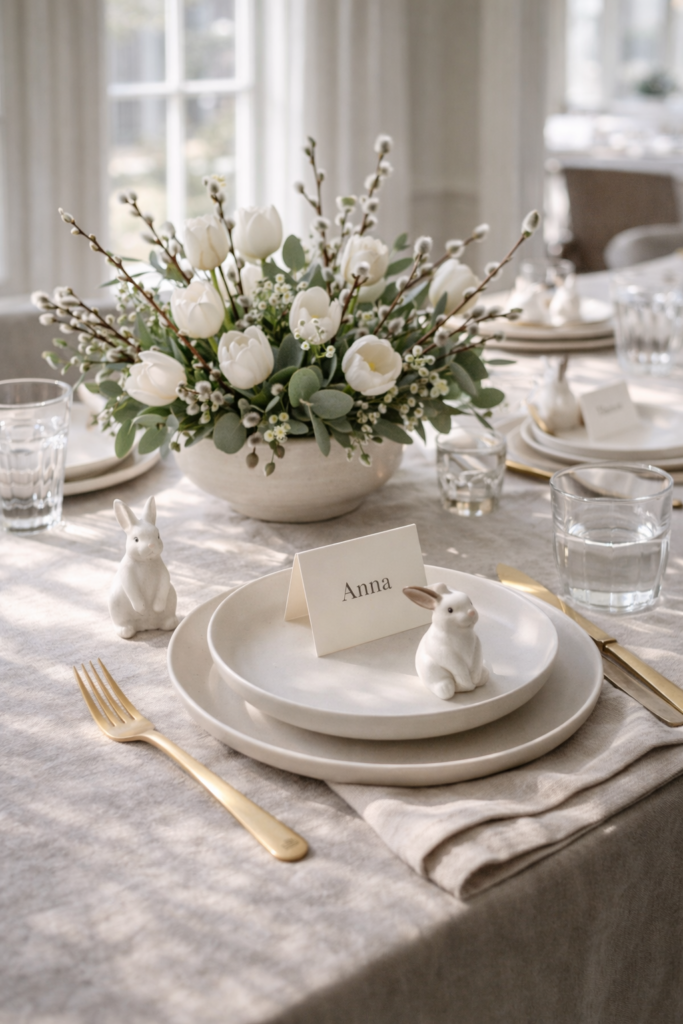
The dish here is the table itself. An Easter brunch table setting is a build, not a decoration: it has layers, a timeline, and a working temperature plan. Get the order right and you spend 20 minutes on the table and 90 minutes talking to your guests instead of hunting for a fourth serving spoon.
Advertisements1
I plan neutral spring tables around three constraints: a low centerpiece so people can see each other, a warm-white and sage palette that photographs well in morning light, and a menu that holds at 200 F (93 C) for an hour. Those three rules solve 80 percent of hosting problems before they happen.
Below is the full package: the layered setting, the make-ahead brunch menu for 6, exact hold temperatures, and the storage plan for leftovers. Numbers first, pretty second. Keep it simple, keep it growing.
Why You'll Love This Recipe
About the Ingredients
6 cream or oat-colored linen napkins, 20 x 20 inches (50 x 50 cm)
Mid-weight washed linen holds a fold without starch and photographs better than cotton. A cotton-linen blend or oversized cotton dinner napkin is a fine substitute if linen is out of budget.
6 woven rattan or seagrass charger plates, 13 inches (33 cm)
Natural fiber chargers set the neutral tone and cost less than ceramic. Buy 14-inch (35 cm) rounds so a 10.5-inch (27 cm) dinner plate leaves a visible 1.25-inch rim.
6 white stoneware dinner plates, 10.5 inches (27 cm)
Matte white stoneware is the safest base because it makes food colors pop. If you own off-white, use it – just keep all six identical.
4 yards (3.6 m) of 90-inch-wide (229 cm) ivory gauze table runner fabric
A gauze runner bunched down the center adds texture for about $12 and doubles as a photo backdrop. A linen runner or two layered runners work equally well.
3 sage or eucalyptus stems plus 5 white ranunculus or tulips
Real stems read better than plastic, and ranunculus hold 4 to 5 days in cool water. Substitute grocery tulips or dried pampas if ranunculus are unavailable.
3 low glass bud vases, 4 to 6 inches (10 to 15 cm) tall
Short vases keep the centerpiece under the 8-inch (20 cm) sightline rule. Clear glass or matte ceramic both work; avoid anything taller than 8 inches.
6 clear glass water goblets plus 6 stemmed juice glasses
Two glass types let you pre-pour water and juice before guests sit. Thrifted mismatched clear glass looks intentional in a neutral scheme.
12 unscented ivory taper candles, 10 inches (25 cm)
Unscented matters: scented candles fight with food aromas. Ivory tapers on low brass holders add warmth without height.
1 brunch menu: 12 deviled egg halves, 6 warm croissants, 6 ramekins of citrus curd, 1 quiche, 1 fruit platter
Keep the menu to one hot egg dish, one bread, one fruit, and one sweet. A store-bought quiche or frittata is a legitimate shortcut if you hold it at 200 F (93 C).
Tips & Tricks
- Set the table the night before. Linens, chargers, plates, and glassware take 20 minutes and hold fine overnight; only fresh flowers and hot food get added the morning of.
- Measure your sightline. Sit in a chair and look across the table – if you can see the centerpiece blocking a guest's eyes, it is too tall. The 8-inch (20 cm) rule is the fix.
- Warm plates, not the room. Plates held at 150 F (66 C) in a 200 F (93 C) oven for 10 minutes keep eggs and quiche hot through the first 15 minutes of the meal.
- Count your serving pieces before you cook. One spoon per dish, one knife per spread, and a waste bowl for shells prevents the mid-meal kitchen sprint.
Pro Tips
Step-by-Step Instructions
1. Choose the palette
Lock three colors: one base (ivory), one mid-tone (oat or sand), one accent (sage). Anything outside those three stays off the table, which is why the setting reads calm in photos.
2. Lay the base linens
Iron the tablecloth flat, then run the gauze runner down the center in loose S-curves. Bunching, not stretching, is what creates the soft neutral texture people photograph.
3. Build plate stacks
Center a rattan charger 1 inch (2.5 cm) from the table edge, then set the white dinner plate on top so the charger rim shows 1.25 inches (3 cm) all around. Repeat for all 6 seats.
4. Place glassware and napkins
Set the water goblet 1 inch (2.5 cm) above the dinner plate's right edge, juice glass in front-right of it, and fold the linen napkin flat across the plate. All six settings must match within half an inch.
5. Arrange a low centerpiece
Fill 3 bud vases with 2 sage stems and 2 ranunculus each, trimming so the tallest bloom tops out at 8 inches (20 cm). Place them in a row 6 inches (15 cm) apart down the runner's centerline.
6. Add candlelight
Cluster 4 ivory tapers per group on low brass holders at the two ends of the runner, keeping every flame below eye level. Light them 10 minutes before guests sit so the wax pools evenly.
7. Hold the hot food at temperature
Warm plates in a 200 F (93 C) oven for 10 minutes, and hold the quiche at 200 F (93 C) covered with foil for up to 45 minutes. The quiche is ready when a knife inserted at the center comes out clean and the edges are set, not jiggling.
8. Stage the buffet and serve
Set the quiche, croissants, and fruit on a sideboard in that order, with deviled eggs on the table. Fill water and juice to 90 percent, then sit down – total table time should be under 20 minutes.
Delicious Variations
Soft blue and white
swap sage for dusty blue thistle and keep the same ivory base for a coastal Easter look.
Blush and brass
replace white ranunculus with pale pink tulips and use brass chargers instead of rattan for a warmer, dressier table.
Minimal black and cream
use matte black flatware and charcoal linen napkins against ivory for a modern, high-contrast brunch setting.
How to Store Elegant Easter Brunch Table Setting | Neutral Spring Hosting Ideas
Refrigerator
Store deviled egg filling and citrus curd in airtight containers up to 3 days; keep cut fruit covered and chilled up to 2 days. Leftover quiche keeps 4 days refrigerated.
Freezer
Quiche freezes well: wrap slices tightly and freeze up to 2 months. Croissants freeze up to 1 month in a zip-top bag; reheat from frozen. Do not freeze deviled eggs or dressed fruit.
Reheating
Reheat quiche slices at 325 F (163 C) for 12 to 15 minutes until the center reaches 165 F (74 C). Warm croissants at 300 F (149 C) for 5 to 7 minutes. Serve deviled eggs cold, straight from the fridge.
Frequently Asked Questions
Q: How do I set an Easter brunch table without it looking cluttered?
Limit yourself to three colors and five object types: linen, charger, plate, glass, and one centerpiece. Anything beyond that reads as clutter in daylight. Odd-numbered groupings and a low centerpiece do most of the work.
Q: What is the best height for a brunch centerpiece?
Keep the centerpiece under 8 inches (20 cm) tall so seated guests can see each other across the table. Test it by sitting down and checking your sightline before guests arrive. Tall arrangements belong at the table's edge or on a sideboard.
Q: How long can I hold a quiche warm before brunch?
A quiche holds safely at 200 F (93 C) for up to 45 minutes when covered with foil. Past an hour the custard firms and the crust softens. If you need more time, bake it, cool it fully, and reheat slices at 325 F (163 C) for 12 to 15 minutes.
Q: Can I set the Easter table the night before?
Yes, set linens, chargers, plates, glassware, and candles the night before – they hold fine overnight. Add fresh flowers and hot food the morning of. Cover the setting with a sheet if you have pets or dust concerns.
Q: How many deviled egg halves do I need per person for brunch?
Plan two deviled egg halves per guest, so 12 halves for 6 people, plus one extra egg's worth as buffer. If eggs are the only protein on the table, increase to three halves per person.
Build the table the night before, hold the hot food at 200 F (93 C), and keep the centerpiece low. That is the entire system – three rules, 20 minutes of setup, and a brunch that runs itself. Start with the palette and work outward. Keep it simple, keep it growing.
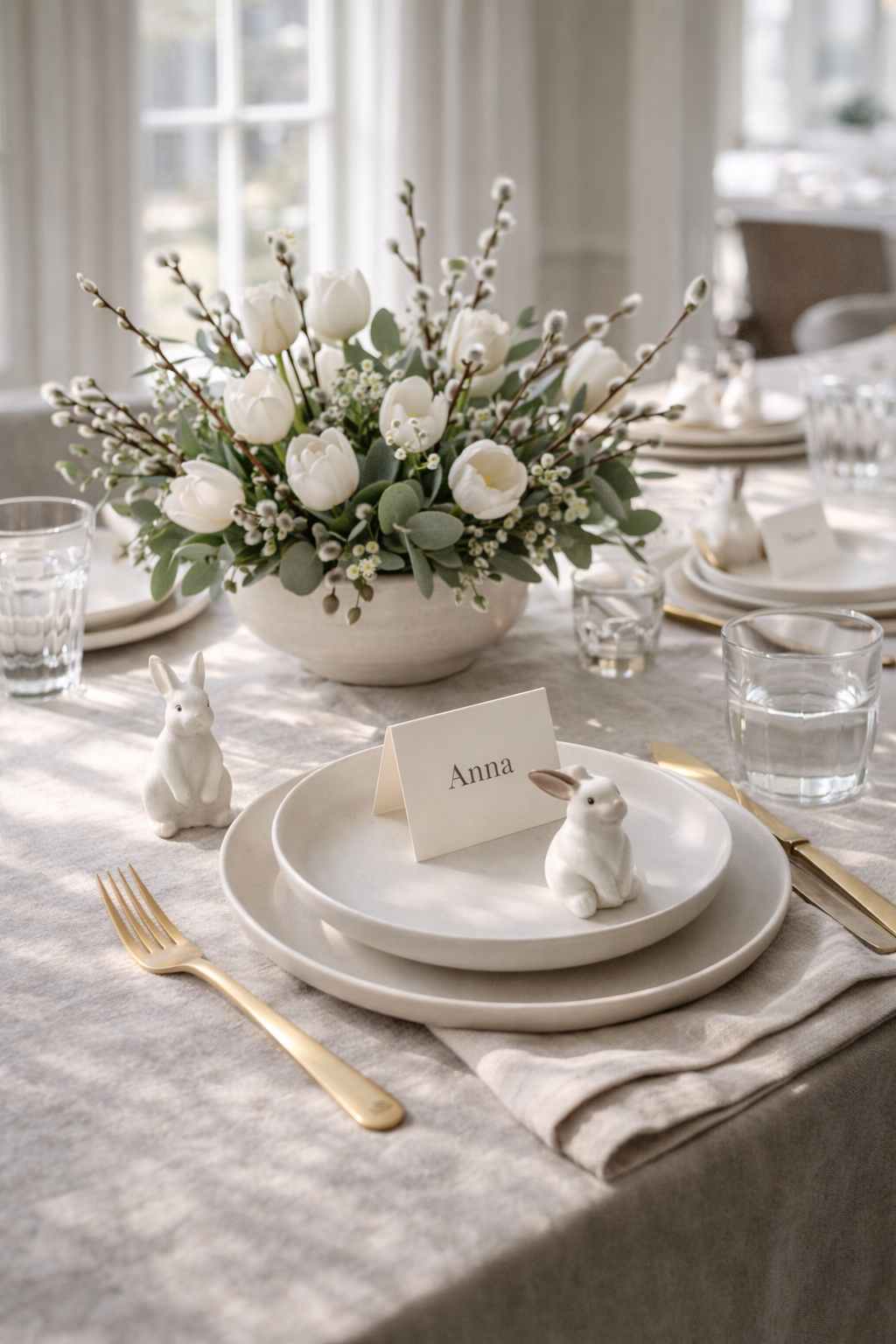
Elegant Easter Brunch Table Setting | Neutral Spring Hosting Ideas
Elegant Easter brunch table setting with neutral spring hosting ideas: layered linens, low centerpieces, and a make-ahead menu that serves 6 without stress.
🧂 Ingredients
- 6 cream or oat-colored linen napkins, 20 x 20 inches (50 x 50 cm)
- 6 woven rattan or seagrass charger plates, 13 inches (33 cm)
- 6 white stoneware dinner plates, 10.5 inches (27 cm)
- 4 yards (3.6 m) of 90-inch-wide (229 cm) ivory gauze table runner fabric
- 3 sage or eucalyptus stems plus 5 white ranunculus or tulips
- 3 low glass bud vases, 4 to 6 inches (10 to 15 cm) tall
- 6 clear glass water goblets plus 6 stemmed juice glasses
- 12 unscented ivory taper candles, 10 inches (25 cm)
- 1 brunch menu: 12 deviled egg halves, 6 warm croissants, 6 ramekins of citrus curd, 1 quiche, 1 fruit platter
📋 Instructions
- 1Choose the palette — Lock three colors: one base (ivory), one mid-tone (oat or sand), one accent (sage). Anything outside those three stays off the table, which is why the setting reads calm in photos.
- 2Lay the base linens — Iron the tablecloth flat, then run the gauze runner down the center in loose S-curves. Bunching, not stretching, is what creates the soft neutral texture people photograph.
- 3Build plate stacks — Center a rattan charger 1 inch (2.5 cm) from the table edge, then set the white dinner plate on top so the charger rim shows 1.25 inches (3 cm) all around. Repeat for all 6 seats.
- 4Place glassware and napkins — Set the water goblet 1 inch (2.5 cm) above the dinner plate's right edge, juice glass in front-right of it, and fold the linen napkin flat across the plate. All six settings must match within half an inch.
- 5Arrange a low centerpiece — Fill 3 bud vases with 2 sage stems and 2 ranunculus each, trimming so the tallest bloom tops out at 8 inches (20 cm). Place them in a row 6 inches (15 cm) apart down the runner's centerline.
- 6Add candlelight — Cluster 4 ivory tapers per group on low brass holders at the two ends of the runner, keeping every flame below eye level. Light them 10 minutes before guests sit so the wax pools evenly.
- 7Hold the hot food at temperature — Warm plates in a 200 F (93 C) oven for 10 minutes, and hold the quiche at 200 F (93 C) covered with foil for up to 45 minutes. The quiche is ready when a knife inserted at the center comes out clean and the edges are set, not jiggling.
- 8Stage the buffet and serve — Set the quiche, croissants, and fruit on a sideboard in that order, with deviled eggs on the table. Fill water and juice to 90 percent, then sit down – total table time should be under 20 minutes.

Liam covers personal finance and investing for beginners, demystifying money management with clear, no-nonsense advice. He focuses on budgeting, saving, and long-term wealth building, often using real-life scenarios to illustrate concepts.