
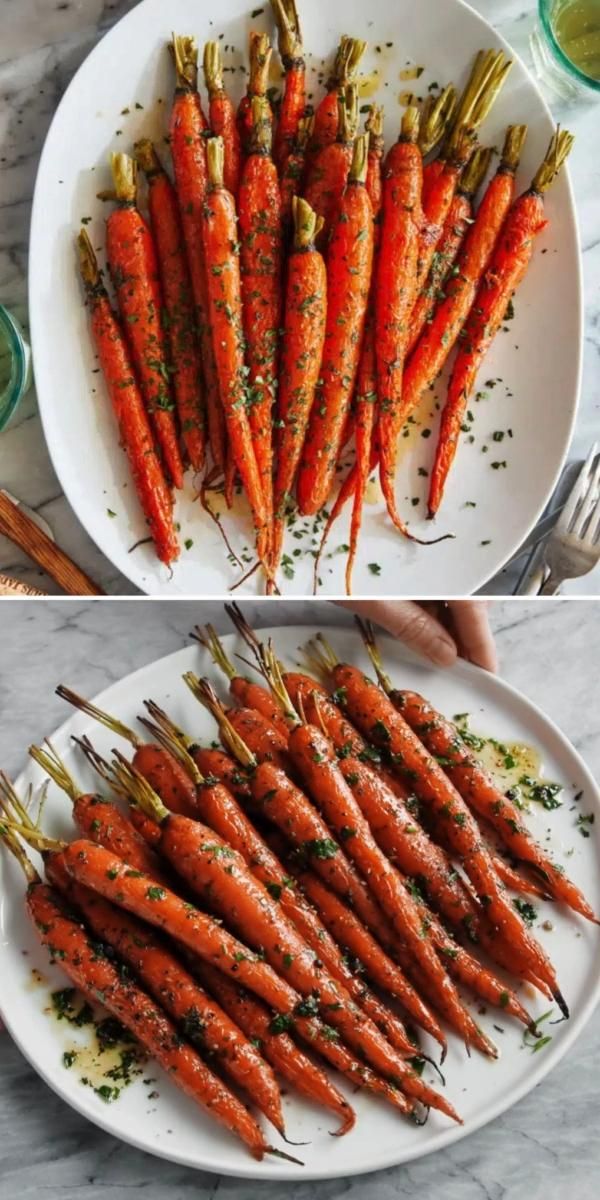
Glazed carrots are one of those quiet dishes that do more work than they get credit for. A little butter, a little sugar, a hot pan, and a vegetable becomes something people reach for twice.
Advertisements1
The trick is not the glaze itself. It is patience. Carrots release water before they take on color, and if you rush that stage you get steamed carrots in syrup instead of glossy, caramelized ones.
This version leans on brown sugar and fresh orange for depth, with a pinch of salt to keep it from turning candy-sweet. It works on a weeknight and it works on a holiday table.
Why You'll Love This Recipe
About the Ingredients
2 pounds (900g) carrots, peeled and cut into 2-inch batons
Look for carrots of even thickness so they cook at the same rate; thin, slender carrots glaze faster and may need 3 to 4 minutes less. If you only have baby carrots, halve them lengthwise so they brown instead of steam.
3 tablespoons (42g) unsalted butter
Butter gives the glaze its shine and nutty edge. For a dairy-free version, use 2 1/2 tablespoons of olive oil or refined coconut oil, though the glaze will be slightly less glossy.
3 tablespoons (40g) packed light brown sugar
Light brown sugar keeps the glaze mellow; dark brown sugar works but tastes more molasses-forward. Honey or maple syrup can replace it one-for-one if you prefer a floral note.
1/3 cup (80ml) fresh orange juice, from about 1 large orange
Fresh juice is worth the squeeze here because the acidity cuts the sugar. Bottled juice works in a pinch, but reduce it by a tablespoon since it is sweeter and thinner.
1 tablespoon (15ml) fresh lemon juice
Lemon keeps the glaze from tasting flat. Bottled lemon juice is acceptable, but use half the amount since it is more concentrated and harsher.
1/2 teaspoon kosher salt
Salt is what separates glazed from candied. If you use fine table salt, start with 1/4 teaspoon and taste before adding more.
1/4 teaspoon freshly ground black pepper
A small amount of pepper adds warmth without heat. White pepper is a quieter substitute if you do not want visible specks.
2 tablespoons (6g) fresh flat-leaf parsley, chopped
Parsley adds color and a clean finish. Thyme or chives are good swaps; add thyme with the butter so it blooms in the fat.
Tips & Tricks
Dry the carrots before they hit the pan
Pat them thoroughly with a towel. Surface water steams the carrots and delays browning by several minutes.
Do not crowd the skillet
Use a 12-inch skillet or cook in two batches. Overlapping carrots trap moisture and turn the glaze into a thin syrup.
Salt at the end, not the start
Early salt draws out water and slows caramelization. Add the kosher salt once the glaze has thickened.
- Wait for the glaze to coat the back of a spoon: If it still looks watery, keep cooking. It should cling and look glossy, not pool at the bottom of the pan.
Pro Tips
Step-by-Step Instructions
1. Prep the carrots
Peel the carrots and cut them into 2-inch batons, roughly 1/2 inch thick. Pat them completely dry with paper towels so they sear instead of steam.
2. Melt the butter
Heat a 12-inch skillet over medium heat for 2 minutes, then add the butter. Swirl until it foams and smells nutty, about 45 seconds. Do not let it brown.
3. Start the carrots
Add the carrots in a single layer and cook, stirring every 2 minutes, for 8 to 10 minutes at medium heat (about 350F / 175C pan temperature). They are ready for the next step when the edges look lightly golden and the surface is dry, not wet.
4. Add sugar and juice
Sprinkle the brown sugar over the carrots and stir for 30 seconds until it melts into the butter. Pour in the orange juice and lemon juice; the pan will bubble hard at first, which is exactly what you want.
5. Glaze and reduce
Lower the heat to medium-low and simmer for 12 to 15 minutes, stirring occasionally, until the liquid reduces to a glossy coating that clings to the carrots. The glaze is done when it coats the back of a spoon and the carrots are fork-tender with a slight resistance at the center.
6. Season and finish
Turn off the heat and stir in the kosher salt and black pepper. Taste one carrot and adjust with a pinch more salt if the glaze tastes flat. Let the pan sit for 2 minutes so the glaze tightens.
7. Garnish and serve
Transfer the carrots to a warm platter, spoon the remaining glaze from the pan over the top, and scatter the chopped parsley across the dish. Serve immediately while the glaze is still glossy.
Delicious Variations
Honey-Thyme Glazed Carrots
Swap the brown sugar for honey and add 4 sprigs of fresh thyme with the butter for an herbal, floral version.
Spicy Maple Glazed Carrots
Use maple syrup instead of brown sugar and add 1/4 teaspoon of cayenne with the salt for a sweet-heat contrast.
Balsamic Glazed Carrots
Replace the orange juice with 1/4 cup balsamic vinegar and 2 tablespoons water; the glaze turns darker and more savory.
How to Store Glazed Carrots
Refrigerator
Store in an airtight container for up to 4 days. The glaze will firm up when cold, which is normal.
Freezer
Freeze for up to 2 months in a freezer-safe bag with the air pressed out. Thaw overnight in the refrigerator before reheating.
Reheating
Warm in a skillet over medium-low heat with 1 tablespoon of water, stirring until the glaze loosens, about 4 to 5 minutes. Avoid the microwave, which makes the carrots rubbery.
Frequently Asked Questions
Q: Why are my glazed carrots mushy?
They were cooked too long or crowded in the pan. Cook them in a single layer over medium heat and stop when a knife slides in with slight resistance, not without any.
Q: Can I make glazed carrots ahead of time?
Yes, and they reheat well. Cook them fully, cool to room temperature, refrigerate up to 4 days, then reheat gently with a splash of water to loosen the glaze.
Q: What is the best way to cut carrots for glazing?
Cut them into 2-inch batons of even thickness, about 1/2 inch wide. Uniform pieces cook at the same rate and give you better caramelization than thin coins.
Q: Can I use baby carrots instead of whole carrots?
Yes, but halve them lengthwise first. Whole baby carrots are round and dense, so they steam rather than brown and take longer to become tender.
Q: How do I keep the glaze from crystallizing?
Add the lemon or orange juice with the sugar and stir constantly until the sugar dissolves. Acid and motion prevent the sugar from seizing into crystals as it cools.
Make these glazed carrots once and they will earn a permanent spot next to the roast. If you try them, tell me how the glaze turned out and what you served them with. Less noise, more signal.
Glazed Carrots
Glazed Carrots are tender, buttery, and caramelized in brown sugar and orange, a 35-minute stovetop side that turns plain carrots into a holiday-worthy dish.
🧂 Ingredients
- 2 pounds (900g) carrots, peeled and cut into 2-inch batons
- 3 tablespoons (42g) unsalted butter
- 3 tablespoons (40g) packed light brown sugar
- 1/3 cup (80ml) fresh orange juice, from about 1 large orange
- 1 tablespoon (15ml) fresh lemon juice
- 1/2 teaspoon kosher salt
- 1/4 teaspoon freshly ground black pepper
- 2 tablespoons (6g) fresh flat-leaf parsley, chopped
📋 Instructions
- 1Prep the carrots — Peel the carrots and cut them into 2-inch batons, roughly 1/2 inch thick. Pat them completely dry with paper towels so they sear instead of steam.
- 2Melt the butter — Heat a 12-inch skillet over medium heat for 2 minutes, then add the butter. Swirl until it foams and smells nutty, about 45 seconds. Do not let it brown.
- 3Start the carrots — Add the carrots in a single layer and cook, stirring every 2 minutes, for 8 to 10 minutes at medium heat (about 350F / 175C pan temperature). They are ready for the next step when the edges look lightly golden and the surface is dry, not wet.
- 4Add sugar and juice — Sprinkle the brown sugar over the carrots and stir for 30 seconds until it melts into the butter. Pour in the orange juice and lemon juice; the pan will bubble hard at first, which is exactly what you want.
- 5Glaze and reduce — Lower the heat to medium-low and simmer for 12 to 15 minutes, stirring occasionally, until the liquid reduces to a glossy coating that clings to the carrots. The glaze is done when it coats the back of a spoon and the carrots are fork-tender with a slight resistance at the center.
- 6Season and finish — Turn off the heat and stir in the kosher salt and black pepper. Taste one carrot and adjust with a pinch more salt if the glaze tastes flat. Let the pan sit for 2 minutes so the glaze tightens.
- 7Garnish and serve — Transfer the carrots to a warm platter, spoon the remaining glaze from the pan over the top, and scatter the chopped parsley across the dish. Serve immediately while the glaze is still glossy.

Kenji explores technology and digital minimalism, helping readers declutter their digital lives and focus on what matters. He writes about app selection, notification management, and creating healthy tech habits, based on his own experiments with unplugging.