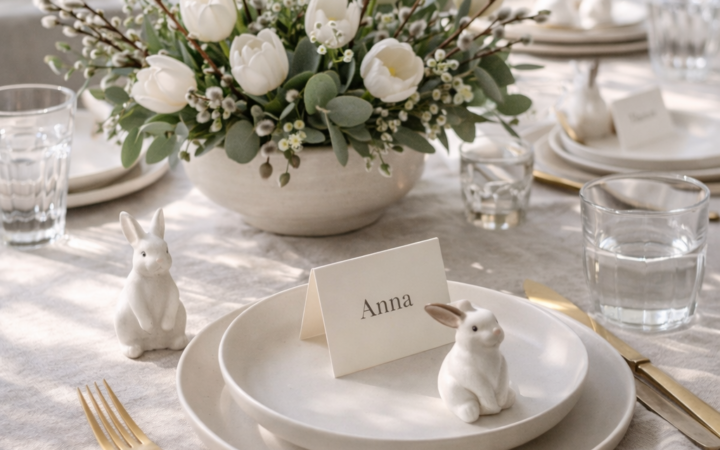
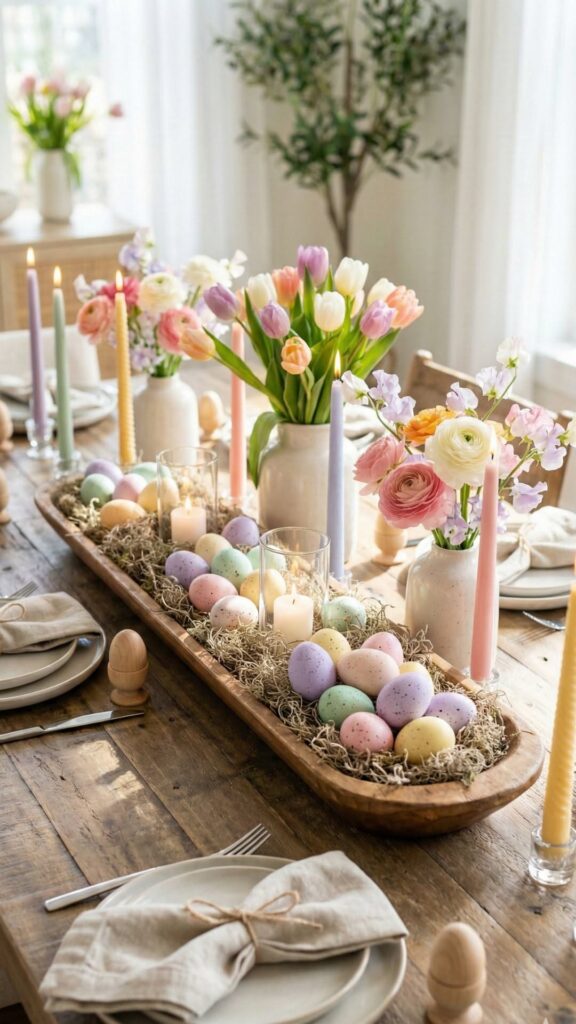
A holiday table does not need a shopping trip. It needs a point of view.
Advertisements1
Most Easter centerpieces fail because they try to say everything at once. Pastel eggs, ribbons, bunnies, candles, fresh flowers – stacked together, they cancel each other out. The fix is subtraction. Pick one hero material, one texture, and one light source, then let the rest of the table breathe.
These fifteen ideas follow that logic. Each one uses grocery-store flowers, real or wooden eggs, and vessels from your kitchen cabinets. Fifteen to thirty-five minutes per piece, no special tools, and nothing that wilts before dessert.
Why You'll Love This Recipe
About the Ingredients
15 to 20 fresh tulips or daffodils, stems trimmed at a 45-degree angle
Tulips hold their shape in cool rooms for four to five days; daffodils last longer but must be conditioned in their own bucket because their sap shortens other stems. Substitute hyacinths for stronger scent.
12 wooden or papier-mache eggs, 2 to 3 inches tall
Wooden eggs are the workhorse: paint, dye, or stamp them and reuse every spring. If you cannot find them, blow out a dozen real eggs and rinse the shells.
1 set food-safe dye tablets or 1 cup (240 ml) liquid food coloring
Gel paste gives deeper, more even color than liquid drops. For a natural look, simmer 2 cups beet peels or red cabbage in water for thirty minutes and cool before dyeing.
1 bunch fresh mint or rosemary sprigs, about 1 cup loosely packed
Herbs hide floral foam and add scent. Rosemary holds up for days without water; mint wilts within hours, so tuck it in last.
1 yard (0.9 m) natural jute twine or 1 inch (2.5 cm) wide ribbon
Jute reads rustic, satin reads formal – choose based on your plates. Buy ribbon with a wired edge if you plan to tie bows that hold their shape.
3 to 4 unscented taper or pillar candles, 6 to 8 inches tall
Unscented matters: scented candles fight the flowers and the food. Beeswax tapers burn cleanly and drip less than paraffin.
1 bag (12 oz / 340 g) natural raffia or dried wheat stalks
Raffia makes instant nests and napkin rings. Dried wheat is a good substitute and stores flat in a drawer for years.
1 block (about 3 x 4 x 8 inches / 7.6 x 10 x 20 cm) floral foam, or 3 small glass jars as a foam-free alternative
Floral foam locks stems in place for low bowls. If you prefer no foam, use a tight grid of tape across a jar mouth to hold stems upright.
1 neutral linen table runner, 12 to 14 inches wide
A plain runner anchors busy arrangements. A length of burlap or a folded white sheet works just as well and costs nothing.
1 can (13 oz / 370 g) white craft paint plus 1 small sponge
Matte craft paint gives eggs a soft chalky finish that photographs beautifully. Acrylic paint works but dries glossier.
Tips & Tricks
Work in odd numbers
groups of three, five, or seven eggs and stems always look more natural than even counts, which read as manufactured.
Build on a tray
arranging on a rimmed tray or cutting board lets you move the whole centerpiece in one motion when it is time to serve.
Test candle clearance
trim wicks to one quarter inch and keep flames at least six inches from dried raffia, wheat, or paper egg shells.
- Keep every centerpiece under twelve inches tall: anything taller blocks conversation across the table, which is the one job a centerpiece should never do.
Pro Tips
Step-by-Step Instructions
1. Prep the workspace
Cover the table with newspaper or a plastic sheet and set out jars, cups, or bowls – one per dye color. Working over a covered surface means spills are a wipe, not a stain, and keeps the process calm.
2. Mix the dye baths
Fill each jar with 1 cup (240 ml) warm water, 1 tablespoon white vinegar, and 10 to 15 drops of food coloring or one dissolved dye tablet. Warm water opens the shell's pores so color takes evenly; vinegar sets the dye.
3. Dye the eggs
Lower eggs in with a spoon and leave them 3 to 5 minutes for pastel, 10 to 15 minutes for saturated color. Lift one out at the five-minute mark to check – the shell should look two shades darker wet than the final dry color.
4. Dry and buff the eggs
Rest dyed eggs on a wire rack over a paper towel for 30 minutes, then buff each one with a drop of vegetable oil on a soft cloth. The oil seals the shell and gives a low, even sheen instead of a chalky finish.
5. Trim and condition the flowers
Cut stems at a 45-degree angle, remove all leaves below the waterline, and let tulips drink in cool water for 30 minutes. Hydrated stems stand upright for hours instead of drooping over the rim.
6. Build the base arrangement
Soak floral foam for 10 minutes until it sinks on its own, trim it to sit 1 inch above the bowl rim, then insert the tallest stems first in the center. Working tall-to-short creates a dome shape that reads full from every seat.
7. Add eggs, herbs, and nests
Tuck eggs into gaps at the base, then fill remaining holes with rosemary or mint and a coiled ring of raffia. Nothing should look placed – push stems in at slight angles so the arrangement feels gathered, not engineered.
8. Finish with candlelight
Set tapers in candle cups or small jars, trim wicks to one quarter inch, and light them 10 minutes before guests sit down. A flame at 2,000 F (1,093 C) tip temperature is the only heat source here, so keep dried material six inches clear.
9. Style the runner and check sightlines
Run the linen runner down the center, place one small arrangement every 18 to 24 inches, and sit in a chair to confirm you can see over everything. If a piece blocks a face across the table, lower it by two inches.
Delicious Variations
Natural dye Easter table
swap food coloring for beet, turmeric, and red cabbage baths, then pair the muted eggs with dried wheat and beeswax tapers for a farmhouse look.
Modern minimalist centerpiece
use three white pillar candles on a bare wood board with a single row of undyed wooden eggs and one sprig of eucalyptus per plate.
Kids' craft-table version
replace glass vessels with paper cups, use washable paint and foam stamps on wooden eggs, and let children build the nests from shredded paper.
How to Store 15 Easy DIY Easter Table Decoration Ideas – Festive Spring Centerpieces
Refrigerator
Fresh flower arrangements keep best in a cool room, not the refrigerator; if you must chill them, cover loosely with a plastic bag and keep them away from fruit, which releases ethylene and shortens bloom life.
Freezer
Do not freeze fresh flowers or dyed real eggs. Wooden and papier-mache eggs, ribbon, and raffia store indefinitely in a labeled box in a dry closet.
Reheating
Not applicable. Refresh wilted arrangements by recutting stems one inch and replacing the water with cool water and a pinch of sugar.
Frequently Asked Questions
Q: How do I keep dyed Easter eggs from sweating and ruining my table?
Dyed real eggs sweat when they move from a cold refrigerator to a warm room, so pull them out thirty minutes early and set them on a folded paper towel. If the eggs are purely decorative, blow out the shells and they will never sweat or smell.
Q: How long do tulip centerpieces last on an Easter table?
Tulips hold for four to five days in cool water, and they keep growing after cutting, so expect the arrangement to open and shift daily. Recut the stems at a 45-degree angle every two days and change the water to stretch them to a full week.
Q: What can I use instead of floral foam?
A tight grid of clear tape across the mouth of a jar holds stems upright without any foam. You can also use a small glass filled with marbles, which anchors stems and looks intentional when the glass is clear.
Q: Are wooden eggs safe to use around candles?
Yes, as long as flames stay at least six inches from the wood and you never leave burning candles unattended. Keep tapers in metal or glass cups so they cannot tip into dried raffia or wheat.
Q: How do I stop my Easter centerpiece from blocking conversation?
Keep the tallest point under twelve inches and sit in a chair to check the sightline before guests arrive. If you can see the person across from you, the arrangement is the right height.
Pick one idea, gather what you already own, and build it slowly this weekend. A table that feels festive is rarely the busiest one – it is the one where every object was chosen on purpose. Less noise, more signal.
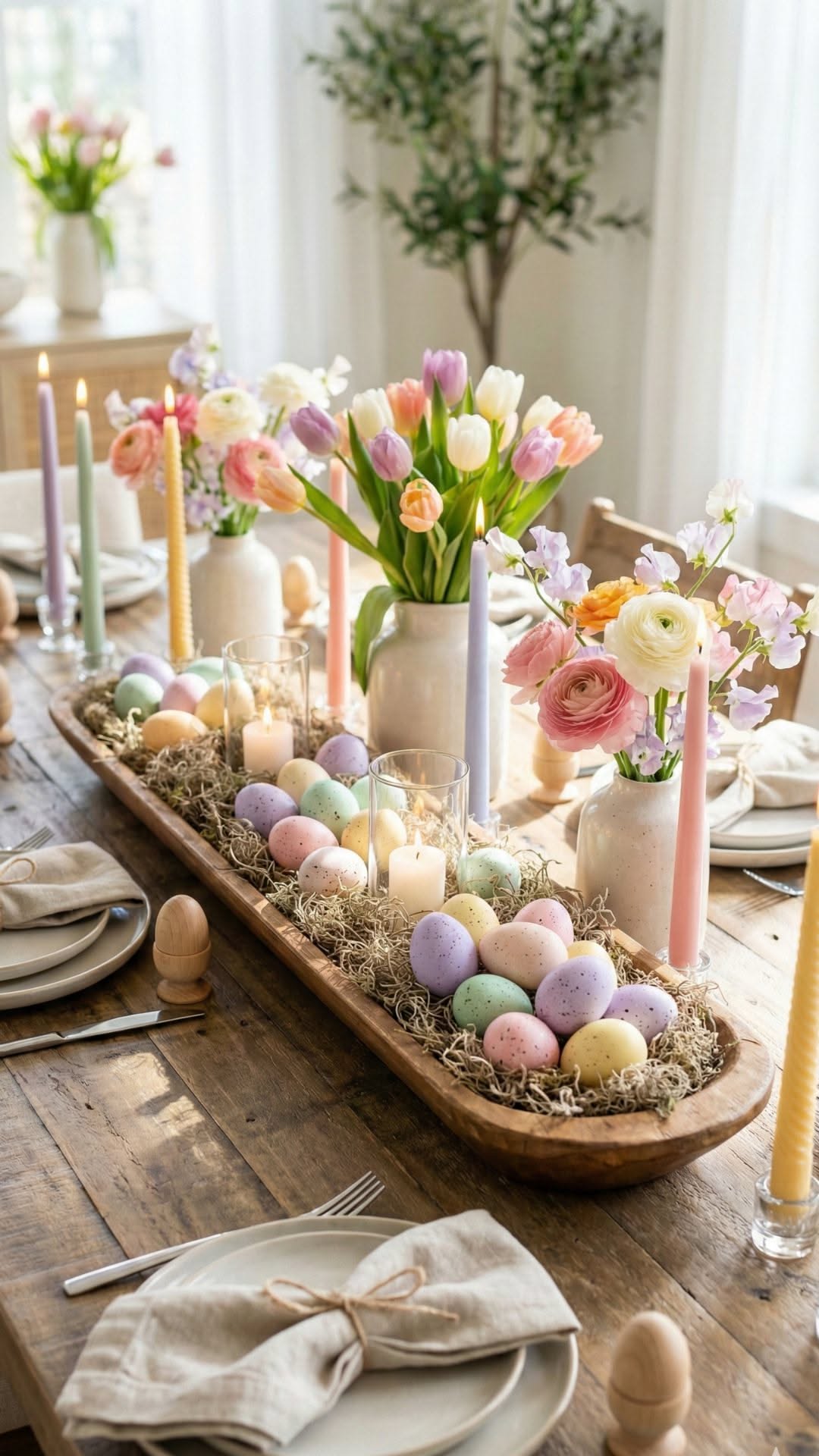
15 Easy DIY Easter Table Decoration Ideas – Festive Spring Centerpieces
Easy DIY Easter table decorations turn a plain spring table into a festive centerpiece in under an hour using eggs, tulips, and candles you already own.
🧂 Ingredients
- 15 to 20 fresh tulips or daffodils, stems trimmed at a 45-degree angle
- 12 wooden or papier-mache eggs, 2 to 3 inches tall
- 1 set food-safe dye tablets or 1 cup (240 ml) liquid food coloring
- 1 bunch fresh mint or rosemary sprigs, about 1 cup loosely packed
- 1 yard (0.9 m) natural jute twine or 1 inch (2.5 cm) wide ribbon
- 3 to 4 unscented taper or pillar candles, 6 to 8 inches tall
- 1 bag (12 oz / 340 g) natural raffia or dried wheat stalks
- 1 block (about 3 x 4 x 8 inches / 7.6 x 10 x 20 cm) floral foam, or 3 small glass jars as a foam-free alternative
- 1 neutral linen table runner, 12 to 14 inches wide
- 1 can (13 oz / 370 g) white craft paint plus 1 small sponge
📋 Instructions
- 1Prep the workspace — Cover the table with newspaper or a plastic sheet and set out jars, cups, or bowls – one per dye color. Working over a covered surface means spills are a wipe, not a stain, and keeps the process calm.
- 2Mix the dye baths — Fill each jar with 1 cup (240 ml) warm water, 1 tablespoon white vinegar, and 10 to 15 drops of food coloring or one dissolved dye tablet. Warm water opens the shell's pores so color takes evenly; vinegar sets the dye.
- 3Dye the eggs — Lower eggs in with a spoon and leave them 3 to 5 minutes for pastel, 10 to 15 minutes for saturated color. Lift one out at the five-minute mark to check – the shell should look two shades darker wet than the final dry color.
- 4Dry and buff the eggs — Rest dyed eggs on a wire rack over a paper towel for 30 minutes, then buff each one with a drop of vegetable oil on a soft cloth. The oil seals the shell and gives a low, even sheen instead of a chalky finish.
- 5Trim and condition the flowers — Cut stems at a 45-degree angle, remove all leaves below the waterline, and let tulips drink in cool water for 30 minutes. Hydrated stems stand upright for hours instead of drooping over the rim.
- 6Build the base arrangement — Soak floral foam for 10 minutes until it sinks on its own, trim it to sit 1 inch above the bowl rim, then insert the tallest stems first in the center. Working tall-to-short creates a dome shape that reads full from every seat.
- 7Add eggs, herbs, and nests — Tuck eggs into gaps at the base, then fill remaining holes with rosemary or mint and a coiled ring of raffia. Nothing should look placed – push stems in at slight angles so the arrangement feels gathered, not engineered.
- 8Finish with candlelight — Set tapers in candle cups or small jars, trim wicks to one quarter inch, and light them 10 minutes before guests sit down. A flame at 2,000 F (1,093 C) tip temperature is the only heat source here, so keep dried material six inches clear.
- 9Style the runner and check sightlines — Run the linen runner down the center, place one small arrangement every 18 to 24 inches, and sit in a chair to confirm you can see over everything. If a piece blocks a face across the table, lower it by two inches.

Kenji explores technology and digital minimalism, helping readers declutter their digital lives and focus on what matters. He writes about app selection, notification management, and creating healthy tech habits, based on his own experiments with unplugging.