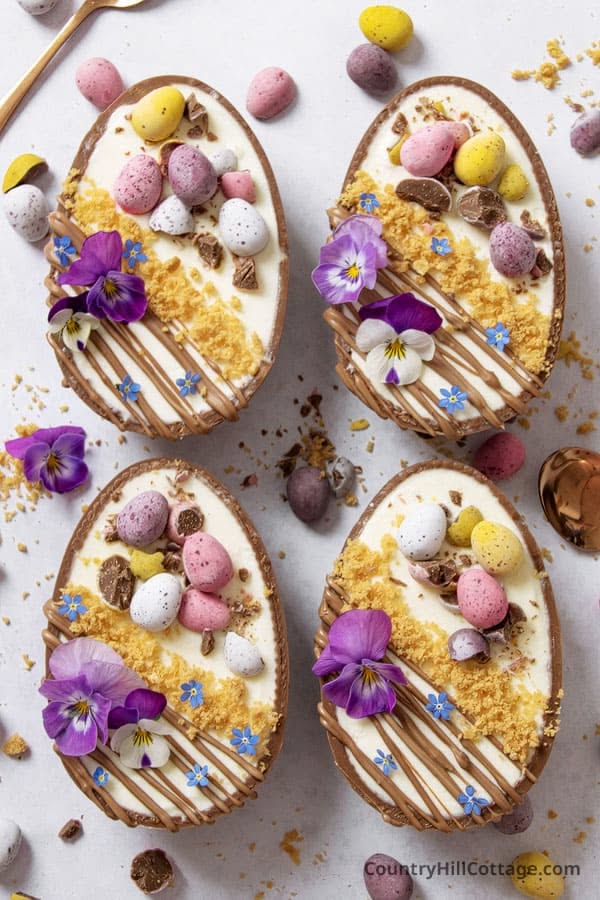
Easter Egg Cheesecake is a baked vanilla cheesecake on a buttery graham crust, decorated with pastel candy-coated chocolate eggs. The numbers matter here: a 325°F (163°C) water bath for 55 minutes produces a custard that sets without cracking, and the payoff is a dessert that feeds 10 people from one 9-inch pan.
Advertisements1
Most cheesecake failures trace back to three variables: oven temperature, mixing speed, and cooling speed. Control those and you get a flat top, a dense but creamy crumb, and clean slices every time. I tested this recipe four times to lock in the ratios below.
Plan for 25 minutes of prep, 55 minutes of baking, and at least 6 hours of chilling. The chilling is non-negotiable: a warm cheesecake will slump when you cut it, no matter how good the batter was.
Why You'll Love This Recipe
About the Ingredients
2 cups (200g) graham cracker crumbs
Pulse whole crackers in a food processor for a fresher, coarser crumb than pre-ground boxes. Substitute an equal weight of digestive biscuits or shortbread for a richer base.
6 tablespoons (85g) unsalted butter, melted
Melt and cool it for 5 minutes before mixing so the crumbs do not turn greasy. Salted butter works if you drop the added salt entirely.
2 tablespoons (25g) granulated sugar, for the crust
This small amount helps the crust brown and hold together. Light brown sugar adds a faint caramel note if you prefer.
24 ounces (680g) full-fat cream cheese, room temperature
Buy block cream cheese, not spreadable tub style, which contains extra water and gums. Leave it on the counter 2 hours before mixing.
3/4 cup (150g) granulated sugar, for the filling
Standard white sugar dissolves cleanly into cold batter. Do not swap in honey or maple syrup; the added liquid will prevent the custard from setting.
2 large eggs plus 1 large egg yolk, room temperature
Cold eggs seize the batter and cause lumps. If you forgot, submerge them in warm tap water for 10 minutes.
1/2 cup (120g) full-fat sour cream, room temperature
Sour cream adds tang and looseness. Plain whole-milk Greek yogurt is a direct 1-to-1 substitute with slightly more acidity.
1 1/2 teaspoons vanilla extract
Use real extract, not imitation, since vanilla is the dominant flavor here. Vanilla bean paste gives visible flecks and a stronger aroma.
1 tablespoon (8g) all-purpose flour
Flour stabilizes the custard and reduces cracking. Cornstarch works at the same quantity for a gluten-free version.
1/4 teaspoon fine sea salt
Salt sharpens the dairy flavor. Table salt is fine but use slightly less, about 1/8 teaspoon.
1 1/2 cups (255g) pastel candy-coated chocolate eggs, for topping
Add them after chilling so they stay crisp and their colors do not bleed. Crushed malted eggs or pastel chocolate chips are good alternatives.
Tips & Tricks
Mix on low speed only
high speed whips air into the batter, and trapped air expands in the oven, which is the number one cause of a cracked top.
Cool in stages
leave the cheesecake in the switched-off oven with the door propped open for 1 hour, then on the counter for 1 hour, then chill. Sudden temperature drops cause the surface to contract and split.
Wrap the pan twice
two layers of heavy-duty foil around the springform prevent water from the bath seeping into the crust, which turns it soggy.
- Room temperature is a temperature, not a suggestion: cream cheese below 65°F (18°C) will leave lumps that never smooth out, so let it sit out a full 2 hours.
Pro Tips
Step-by-Step Instructions
1. Preheat and prepare
Heat the oven to 325°F (163°C) and position a rack in the lower-middle position. Wrap the outside of a 9-inch springform pan in two layers of heavy-duty foil and set a kettle of water to boil.
2. Make the crust
Combine 2 cups graham crumbs, 6 tablespoons melted butter, 2 tablespoons sugar, and a pinch of salt, then press firmly into the pan bottom and 1 inch up the sides. Bake at 325°F (163°C) for 10 minutes until fragrant and slightly darkened at the edges.
3. Beat the cream cheese
Beat 24 ounces of room-temperature cream cheese on low speed for 2 minutes until completely smooth with no visible lumps. Scrape the bowl and paddle thoroughly, because unmixed pockets cause streaks later.
4. Add sugar and eggs
Add 3/4 cup sugar, 1 tablespoon flour, and 1/4 teaspoon salt and mix 1 minute. Add the eggs and yolk one at a time on low speed, mixing just 20 seconds after each; stop as soon as the last yolk disappears.
5. Finish the batter
Stir in 1/2 cup sour cream and 1 1/2 teaspoons vanilla by hand with a spatula until uniform. Pour over the crust and smooth the top, then tap the pan twice on the counter to release large bubbles.
6. Bake in a water bath
Set the pan inside a roasting pan and pour boiling water into the roasting pan until it reaches halfway up the springform. Bake at 325°F (163°C) for 55 to 65 minutes, until the edges look set and the center registers 150°F (66°C) and jiggles like firm gelatin.
7. Cool gradually
Turn off the oven, prop the door open 4 inches with a wooden spoon, and leave the cheesecake inside for 1 hour. Remove from the water bath, run a thin spatula around the rim, and cool on a rack 1 hour more.
8. Chill and decorate
Refrigerate uncovered for at least 6 hours or overnight. Just before serving, arrange 1 1/2 cups pastel chocolate eggs in a ring around the outer edge, pressing them lightly into the surface.
Delicious Variations
Lemon Easter Cheesecake
Add 2 tablespoons lemon zest and 2 tablespoons fresh juice to the batter, then top with yellow and white eggs.
Chocolate Nest Version
Fold 4 ounces melted cooled semisweet chocolate into the batter and pipe a ring of chocolate ganache before adding the eggs.
Mini Springform Cheesecakes
Divide the crust and batter among six 4-inch pans and bake at 325°F (163°C) for 28 to 32 minutes, until the centers reach 150°F (66°C).
How to Store Easter Egg Cheesecake
Refrigerator
Cover tightly and refrigerate up to 4 days; add the chocolate eggs the day you serve so they stay glossy.
Freezer
Freeze whole or in slices wrapped in plastic and foil for up to 2 months; thaw overnight in the refrigerator.
Reheating
Do not reheat; serve cold straight from the refrigerator for the best texture.
Frequently Asked Questions
Q: Why did my cheesecake crack on top?
Overmixing and rapid cooling are the two main causes. Mix the batter on low speed only, and cool it gradually in the switched-off oven before refrigerating.
Q: Can I make Easter Egg Cheesecake without a water bath?
Yes, but the texture will be slightly drier and more prone to cracking. If skipping the bath, place a pan of hot water on the rack below and reduce the bake time by 5 minutes.
Q: How do I know when a cheesecake is fully baked?
The center should read 150°F (66°C) on an instant-read thermometer. It will still wobble slightly, which is correct because it firms up as it cools.
Q: How long does Easter Egg Cheesecake need to chill?
A minimum of 6 hours, with overnight being better. The custard needs that time to fully set so slices come out clean.
Q: Can I use low-fat cream cheese?
No, use full-fat block cream cheese for this recipe. Low-fat and spreadable versions contain more water and produce a soft, weepy filling that will not slice.
Bake it the day before, chill it overnight, and you will have a dessert that slices cleanly for 10 people with almost no last-minute work. Print the recipe, set a timer for the 55-minute bake, and check that center temperature before you pull it. Keep it simple, keep it growing.
Easter Egg Cheesecake
Easter Egg Cheesecake is a creamy baked vanilla cheesecake crowned with pastel chocolate eggs, giving you a stunning spring centerpiece in one pan.
🧂 Ingredients
- 2 cups (200g) graham cracker crumbs
- 6 tablespoons (85g) unsalted butter, melted
- 2 tablespoons (25g) granulated sugar, for the crust
- 24 ounces (680g) full-fat cream cheese, room temperature
- 3/4 cup (150g) granulated sugar, for the filling
- 2 large eggs plus 1 large egg yolk, room temperature
- 1/2 cup (120g) full-fat sour cream, room temperature
- 1 1/2 teaspoons vanilla extract
- 1 tablespoon (8g) all-purpose flour
- 1/4 teaspoon fine sea salt
- 1 1/2 cups (255g) pastel candy-coated chocolate eggs, for topping
📋 Instructions
- 1Preheat and prepare — Heat the oven to 325°F (163°C) and position a rack in the lower-middle position. Wrap the outside of a 9-inch springform pan in two layers of heavy-duty foil and set a kettle of water to boil.
- 2Make the crust — Combine 2 cups graham crumbs, 6 tablespoons melted butter, 2 tablespoons sugar, and a pinch of salt, then press firmly into the pan bottom and 1 inch up the sides. Bake at 325°F (163°C) for 10 minutes until fragrant and slightly darkened at the edges.
- 3Beat the cream cheese — Beat 24 ounces of room-temperature cream cheese on low speed for 2 minutes until completely smooth with no visible lumps. Scrape the bowl and paddle thoroughly, because unmixed pockets cause streaks later.
- 4Add sugar and eggs — Add 3/4 cup sugar, 1 tablespoon flour, and 1/4 teaspoon salt and mix 1 minute. Add the eggs and yolk one at a time on low speed, mixing just 20 seconds after each; stop as soon as the last yolk disappears.
- 5Finish the batter — Stir in 1/2 cup sour cream and 1 1/2 teaspoons vanilla by hand with a spatula until uniform. Pour over the crust and smooth the top, then tap the pan twice on the counter to release large bubbles.
- 6Bake in a water bath — Set the pan inside a roasting pan and pour boiling water into the roasting pan until it reaches halfway up the springform. Bake at 325°F (163°C) for 55 to 65 minutes, until the edges look set and the center registers 150°F (66°C) and jiggles like firm gelatin.
- 7Cool gradually — Turn off the oven, prop the door open 4 inches with a wooden spoon, and leave the cheesecake inside for 1 hour. Remove from the water bath, run a thin spatula around the rim, and cool on a rack 1 hour more.
- 8Chill and decorate — Refrigerate uncovered for at least 6 hours or overnight. Just before serving, arrange 1 1/2 cups pastel chocolate eggs in a ring around the outer edge, pressing them lightly into the surface.

Liam covers personal finance and investing for beginners, demystifying money management with clear, no-nonsense advice. He focuses on budgeting, saving, and long-term wealth building, often using real-life scenarios to illustrate concepts.