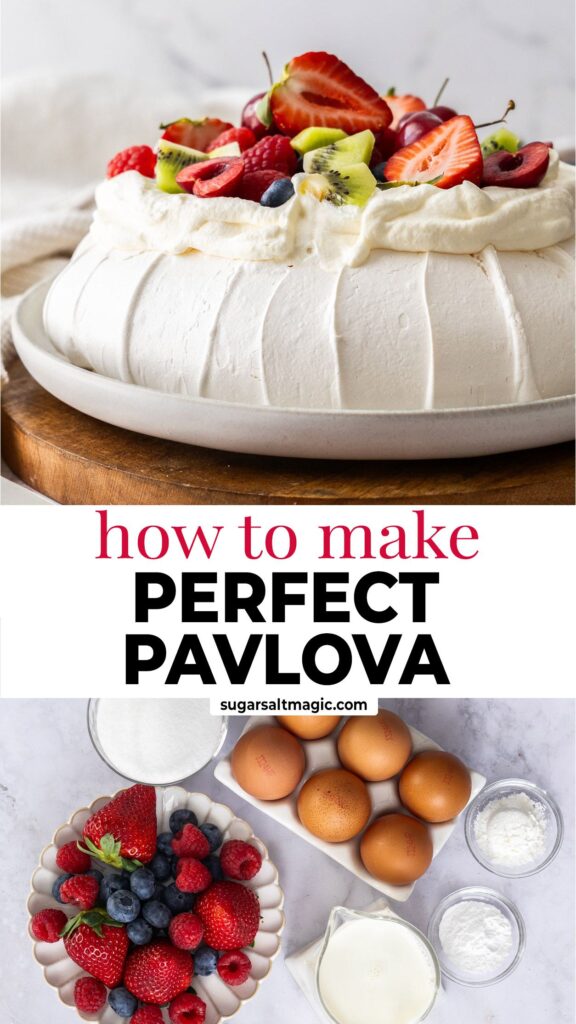
Pavlova is a dessert of contrasts: a crisp, airy shell that gives way to a soft, marshmallow-like center. It's named after the Russian ballerina Anna Pavlova, and it's a beloved dessert in Australia and New Zealand. This recipe delivers a perfect pavlova every time.
Advertisements1
The key is in the meringue technique. We use a precise ratio of egg whites to sugar, a slow bake at a low temperature, and a few pro tricks to ensure stability. The result is a show-stopping dessert that's easier than you think.
Whether you're a seasoned baker or a beginner, this pavlova recipe will become your go-to. Let's break down the science and steps for a flawless result.
Why You'll Love This Recipe
About the Ingredients
4 large egg whites, at room temperature
Room temperature egg whites whip up to a greater volume. Use fresh eggs for best stability. For a substitute, use aquafaba (chickpea brine) but note texture may differ.
1 cup (200g) superfine sugar
Superfine sugar dissolves faster, creating a smoother meringue. You can make your own by pulsing granulated sugar in a food processor for a few seconds.
1 tablespoon cornstarch
Cornstarch helps stabilize the meringue and creates the soft, marshmallow center. It also absorbs moisture, preventing weeping.
1 teaspoon white vinegar
Vinegar (or lemon juice) also stabilizes the meringue and contributes to the soft interior. Use white vinegar or apple cider vinegar for a neutral flavor.
1 teaspoon vanilla extract
Pure vanilla extract adds depth of flavor. You can use vanilla bean paste or the seeds of one vanilla bean for a more intense flavor.
1 1/2 cups (360ml) heavy cream
Heavy cream (or whipping cream) should be cold for best whipping. Use full-fat for a stable, rich topping.
2 tablespoons powdered sugar
Powdered sugar sweetens the cream and helps stabilize it when whipping. You can omit if you prefer less sweet.
2 cups fresh berries (strawberries, raspberries, blueberries)
Use a mix of berries for color and flavor. If berries are not in season, you can use sliced mango, kiwi, or passionfruit pulp.
Tips & Tricks
- Ensure your bowl and beaters are completely clean and free of any grease, as fat prevents egg whites from whipping properly.
- Add sugar gradually, one tablespoon at a time, while beating, to ensure it dissolves fully and creates a glossy meringue.
- When spreading the meringue on the baking sheet, create a slight well in the center to hold the cream and berries, and build up the edges to form a nest.
- Let the pavlova cool completely in the oven with the door slightly ajar to prevent cracking from sudden temperature changes.
Pro Tips
Step-by-Step Instructions
1. Preheat and Prepare
Preheat oven to 250°F (120°C). Line a baking sheet with parchment paper and trace a 9-inch circle (use a cake pan as a guide).
2. Whip Egg Whites
In a clean bowl of a stand mixer, beat egg whites on medium speed until soft peaks form. This takes about 2-3 minutes.
3. Add Sugar Gradually
With mixer running, add superfine sugar, one tablespoon at a time, beating well after each addition. Continue beating on high until stiff, glossy peaks form and sugar is completely dissolved, about 5-7 minutes. Test by rubbing a small amount between fingers; it should be smooth.
4. Fold in Dry Ingredients
Sprinkle cornstarch over meringue, add vinegar and vanilla. Gently fold with a spatula until just combined, being careful not to deflate the meringue.
5. Shape the Pavlova
Spoon meringue onto the prepared circle. Spread it out, creating a slight well in the center and building up the edges. Smooth the sides with a spatula.
6. Bake Low and Slow
Place in preheated oven and bake for 1 hour 15 minutes, or until the outside is crisp and dry to the touch. The meringue should be a very pale cream color, not browned. Turn off oven and leave pavlova inside with door slightly ajar for 1 hour to cool completely.
7. Whip Cream
In a cold bowl, whip heavy cream with powdered sugar until soft peaks form. Do not overwhip; it should be billowy but hold its shape.
8. Assemble and Serve
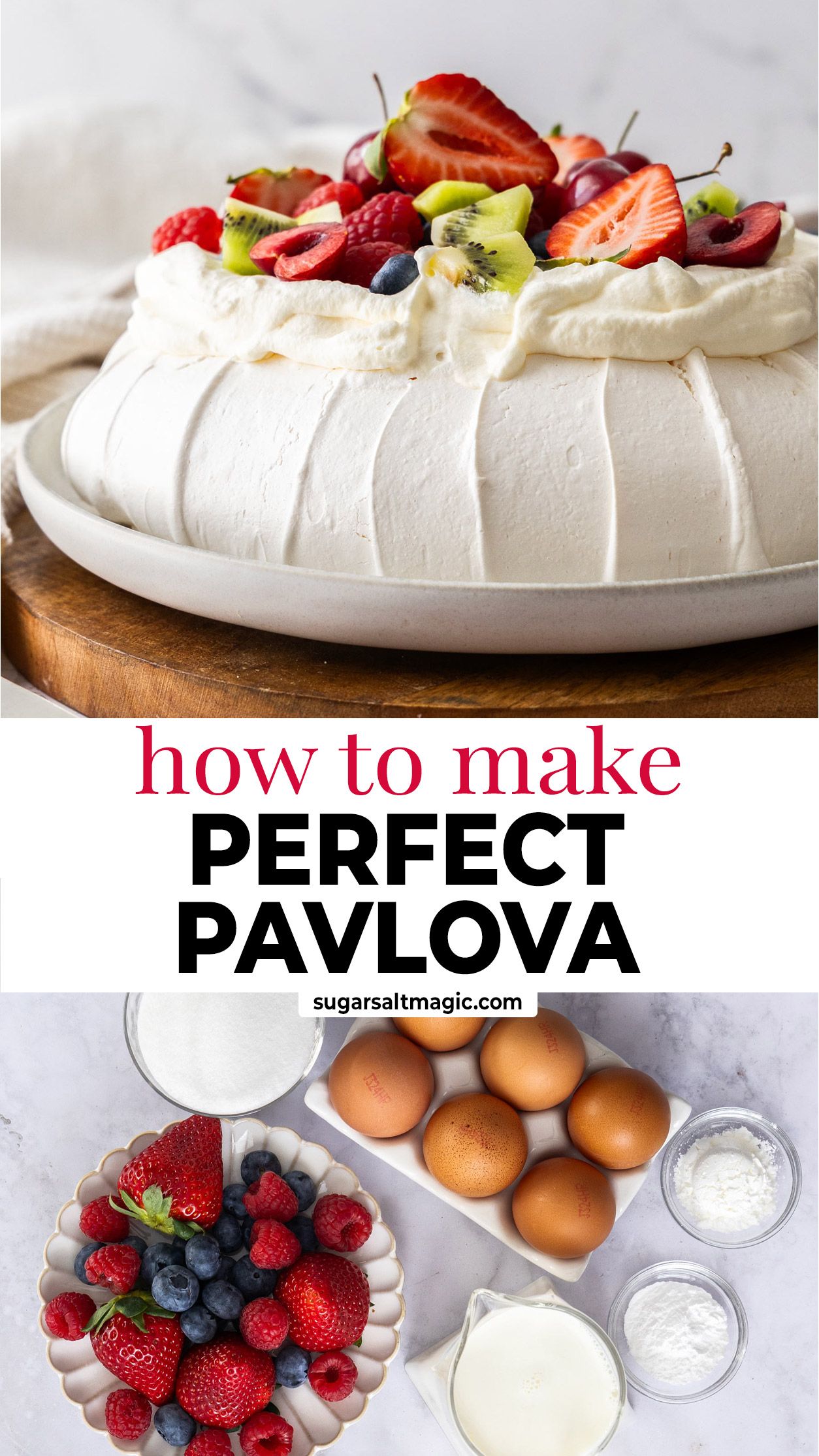
Carefully peel parchment off the cooled pavlova and place on a serving plate. Top with whipped cream and fresh berries. Serve immediately.
Delicious Variations
Chocolate Pavlova
Fold 2 tablespoons of unsweetened cocoa powder into the meringue before shaping. Top with chocolate shavings.
Lemon Curd Pavlova
Spread a layer of lemon curd over the cream for a tangy twist.
Tropical Pavlova
Replace berries with sliced mango, kiwi, and passionfruit pulp for a tropical flavor.
How to Store Best Pavlova
Refrigerator
Once assembled, pavlova is best eaten immediately. Store unassembled meringue in an airtight container at room temperature for up to 3 days.
Freezer
Baked meringue can be frozen (unfilled) for up to 2 months. Wrap in plastic wrap and then foil. Thaw at room temperature for 30 minutes before serving.
Reheating
Do not reheat pavlova. If the meringue becomes soft, place it in a 250°F (120°C) oven for 10 minutes to crisp up, then cool before filling.
Frequently Asked Questions
Q: Why did my pavlova crack?
Cracking is often caused by a sudden temperature change. Always cool the pavlova in the oven with the door slightly ajar. Also, ensure the meringue is not overbeaten, which can cause it to crack.
Q: Can I use liquid egg whites from a carton?
Yes, you can, but they are less stable. Make sure they are at room temperature and use a stabilizer like cream of tartar (1/4 teaspoon) to help them whip up.
Q: How do I know when the pavlova is done?
The pavlova is done when the outside is crisp and dry to the touch, and it easily lifts off the parchment paper. It should be a very pale cream color, not browned. The center will feel soft but that's okay.
Q: Can I make pavlova in advance?
Yes, you can bake the meringue a day ahead and store it in an airtight container at room temperature. Assemble with cream and fruit just before serving to keep the meringue crisp.
Ready to impress your guests with this stunning dessert? Try this Best Pavlova recipe and share your results in the comments below. Don't forget to subscribe for more foolproof baking recipes. Keep it simple, keep it growing.
Best Pavlova
Master the best pavlova: crisp meringue shell, marshmallow center, topped with cream and berries. Foolproof method.
🧂 Ingredients
- 4 large egg whites, at room temperature
- 1 cup (200g) superfine sugar
- 1 tablespoon cornstarch
- 1 teaspoon white vinegar
- 1 teaspoon vanilla extract
- 1 1/2 cups (360ml) heavy cream
- 2 tablespoons powdered sugar
- 2 cups fresh berries (strawberries, raspberries, blueberries)
📋 Instructions
- 1Preheat and Prepare — Preheat oven to 250°F (120°C). Line a baking sheet with parchment paper and trace a 9-inch circle (use a cake pan as a guide).
- 2Whip Egg Whites — In a clean bowl of a stand mixer, beat egg whites on medium speed until soft peaks form. This takes about 2-3 minutes.
- 3Add Sugar Gradually — With mixer running, add superfine sugar, one tablespoon at a time, beating well after each addition. Continue beating on high until stiff, glossy peaks form and sugar is completely dissolved, about 5-7 minutes. Test by rubbing a small amount between fingers; it should be smooth.
- 4Fold in Dry Ingredients — Sprinkle cornstarch over meringue, add vinegar and vanilla. Gently fold with a spatula until just combined, being careful not to deflate the meringue.
- 5Shape the Pavlova — Spoon meringue onto the prepared circle. Spread it out, creating a slight well in the center and building up the edges. Smooth the sides with a spatula.
- 6Bake Low and Slow — Place in preheated oven and bake for 1 hour 15 minutes, or until the outside is crisp and dry to the touch. The meringue should be a very pale cream color, not browned. Turn off oven and leave pavlova inside with door slightly ajar for 1 hour to cool completely.
- 7Whip Cream — In a cold bowl, whip heavy cream with powdered sugar until soft peaks form. Do not overwhip; it should be billowy but hold its shape.
- 8Assemble and Serve — Carefully peel parchment off the cooled pavlova and place on a serving plate. Top with whipped cream and fresh berries. Serve immediately.

Liam covers personal finance and investing for beginners, demystifying money management with clear, no-nonsense advice. He focuses on budgeting, saving, and long-term wealth building, often using real-life scenarios to illustrate concepts.