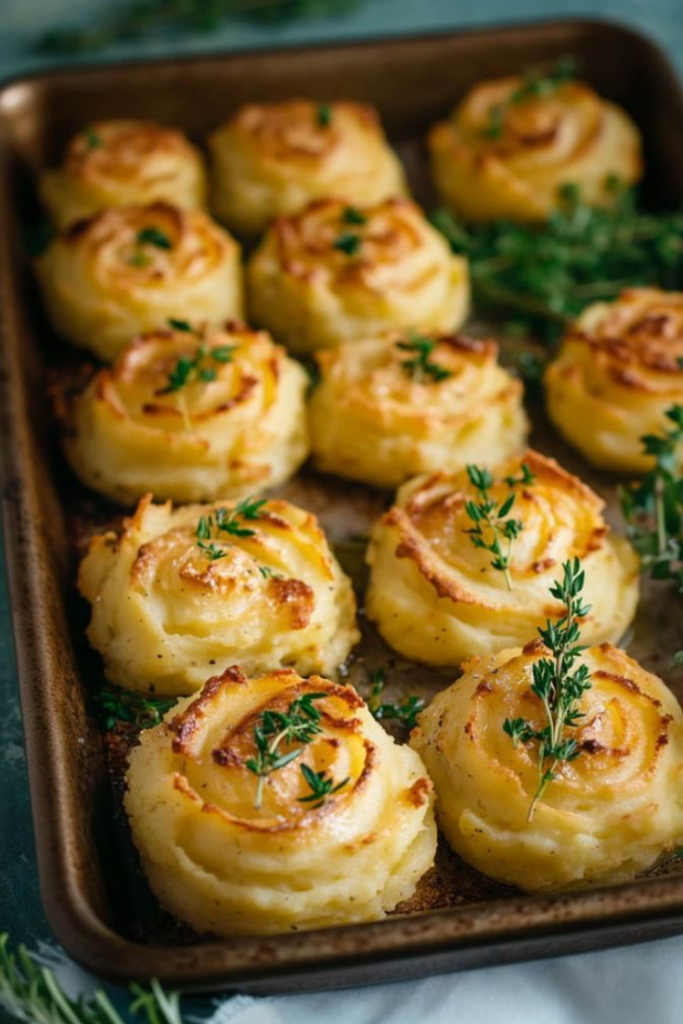
Every Thanksgiving I convince myself I'm going to keep things simple, and every year I end up at 4 p.m. with mashed potatoes on my elbow and a turkey staring at me. Duchess Potatoes are the compromise I finally made with myself: all the buttery, creamy comfort of mashed potatoes, but piped into pretty rosettes that crisp up golden in the oven. They look like you hired a french chef. You did not. You used a piping bag and about twenty minutes.
Advertisements1
The magic is in the dough. You dry the potatoes out on the stove, beat in egg yolks and butter until it's glossy and thick enough to hold a peak, then pipe and bake. That yolk-and-butter situation is what turns a soft scoop into a crisp-edged, cloud-soft rosette that holds its shape on the plate.
My first batch looked like lumpy blobs, and I served them anyway. My aunt asked for the recipe before she finished her first one. So if your rosettes look a little rustic, congratulations, you're doing it right. You're doing better than you think.
Why You'll Love This Recipe
About the Ingredients
2 1/2 lb (1.13 kg) russet or Yukon Gold potatoes, peeled and cut into 1-inch chunks
Russets give the fluffiest, driest mash, which is exactly what holds a rosette shape. Yukon Golds work too, just dry them a minute longer. Skip waxy red potatoes here, they turn gluey.
6 tbsp (85 g) unsalted butter, cut into cubes, plus more for greasing
Cold cubes melt into the hot potatoes more evenly than one big lump. If you only have salted butter, cut the added salt to 1/4 tsp.
3 large egg yolks
Yolks are the structural glue that lets these hold their piped shape. Save the whites for an omelet or a meringue, and use fresh eggs for the best bind.
1/3 cup (80 ml) heavy cream, warmed
Warm cream keeps the mash from seizing; whole milk plus an extra tablespoon of butter is a fine substitute. Don't use cold cream straight from the fridge.
1 tsp fine sea salt, plus more for the boiling water
Fine sea salt dissolves faster than flaky salt. Taste the mash before piping, it should taste slightly saltier than you think, since baking mutes seasoning.
1/4 tsp freshly grated nutmeg
A tiny grate of nutmeg is the classic French touch and it does not make them taste like dessert. No whole nutmeg? Use a scant pinch of ground, not more.
1/4 tsp white pepper
White pepper keeps the mash pristine white; black pepper works but you'll see the flecks. Freshly ground is always worth it.
1/8 tsp baking powder (optional)
A pinch helps the rosettes puff and hold their ridges in the oven. Skip it if you're anti-shortcut, they'll still be delicious.
Tips & Tricks
Dry the potatoes twice
Once after draining in the colander and again in the pot over low heat for 2 minutes, so no steam turns your rosettes soupy.
Pipe while warm
The potato dough stiffens as it cools, so fill the bag immediately and work in batches, keeping the rest covered.
Chill before baking
A 20-minute rest in the fridge firms the rosettes so they keep their shape instead of slumping in the heat.
Don't over-beat
Stop the moment the mash looks smooth and glossy. Overworking releases starch and gives you pasty, gummy potatoes.
Pro Tips
Step-by-Step Instructions
1. Boil the potatoes
Cover the potato chunks with cold water by 1 inch, add 1 tablespoon salt, and bring to a boil. Simmer at a gentle bubble for 15 to 18 minutes, until a knife slides in with zero resistance. Drain well in a colander.
2. Dry the mash
Return the drained potatoes to the dry pot over low heat (about 200F / 95C) for 2 minutes, stirring, until the surface looks matte and no steam rises. This is the single biggest step for lump-free, non-watery rosettes.
3. Rice and enrich
Press the hot potatoes through a ricer or food mill into a bowl, then beat in the butter cubes, warm cream, salt, nutmeg, white pepper, and baking powder until glossy. Stir in the egg yolks one at a time just until combined, the mixture should be thick enough to hold a stiff peak.
4. Heat the oven
Preheat to 425F (220C) with a rack in the upper-middle position. Line two sheet pans with parchment paper.
5. Pipe the rosettes
Fit a piping bag with a large open-star tip and fill it with the warm potato mixture. Pipe 2-inch rosettes about 1 1/2 inches apart, pressing down and releasing upward to finish each with a peak.
6. Chill to set
Refrigerate the piped rosettes for 20 minutes so they firm up. They should feel cool and hold their shape when you nudge one with a fingertip.
7. Bake until golden
Bake one pan at a time for 22 to 26 minutes at 425F (220C), until the ridges are deep golden brown and the tips are crisp, rotating the pan at the 15-minute mark. The centers should read about 200F (95C) on an instant-read thermometer.
8. Serve hot
Slide the rosettes onto a warm platter with an offset spatula and serve immediately, while the edges are still crackly and the middles are pillowy.
Delicious Variations
Cheesy Duchess
Fold 1/2 cup finely grated Gruyere or Parmesan into the mash and scatter a little more on top before baking.
Herb and Garlic
Add 2 tablespoons chopped chives plus 1 roasted garlic clove mashed into the butter for a savory, steakhouse-style side.
Sweet Potato Duchess
Swap in roasted sweet potatoes, add 1 tablespoon maple syrup and a pinch of cinnamon, and bake 2 minutes longer.
How to Store Duchess Potatoes
Refrigerator
Store baked rosettes in an airtight container for up to 4 days, or pipe them raw and refrigerate unbaked for up to 24 hours, covered loosely so they don't sweat.
Freezer
Freeze piped raw rosettes on the parchment-lined pan until solid, then transfer to a freezer bag for up to 2 months. Bake from frozen at 425F (220C), adding 5 to 7 minutes.
Reheating
Reheat baked rosettes on a sheet pan at 375F (190C) for 8 to 10 minutes, until hot through and re-crisped at the edges. Skip the microwave, it steams away the crisp.
Frequently Asked Questions
Q: Can I make Duchess Potatoes ahead of time?
Yes, and they're actually better that way. Pipe the rosettes onto parchment, refrigerate up to 24 hours, then bake straight from the fridge, adding 2 to 3 minutes to the bake time.
Q: Why did my Duchess Potatoes spread in the oven?
Too much moisture or too little egg is almost always the culprit. Dry the potatoes thoroughly over low heat and use all 3 yolks, and chill the piped rosettes for 20 minutes before baking so they set their shape.
Q: Can I use instant mashed potatoes for this?
You can in a pinch, but the texture won't be the same. If you do, prepare them thick with less liquid than the box calls for, then beat in the butter, cream, and yolks as written.
Q: What's the best potato for Duchess Potatoes?
Russets are the classic choice because they're high in starch and mash up dry and fluffy, which holds a piped shape best. Yukon Golds are a close second with a slightly richer flavor.
Q: How do I pipe Duchess Potatoes without a piping bag?
Spoon the mash into a zip-top bag, snip a 1/2-inch corner, or use a large star tip if you have one, and pipe directly onto the parchment. A cookie scoop also works, just skip the fancy ridges.
If you make these Duchess Potatoes this holiday season, snap a photo of those golden rosettes and tell me how your family reacted, because the reactions are my favorite part. Pin this recipe for your Thanksgiving and Christmas wishlist, and remember, a slightly lopsided rosette still tastes like buttery heaven. You're doing better than you think.
Duchess Potatoes
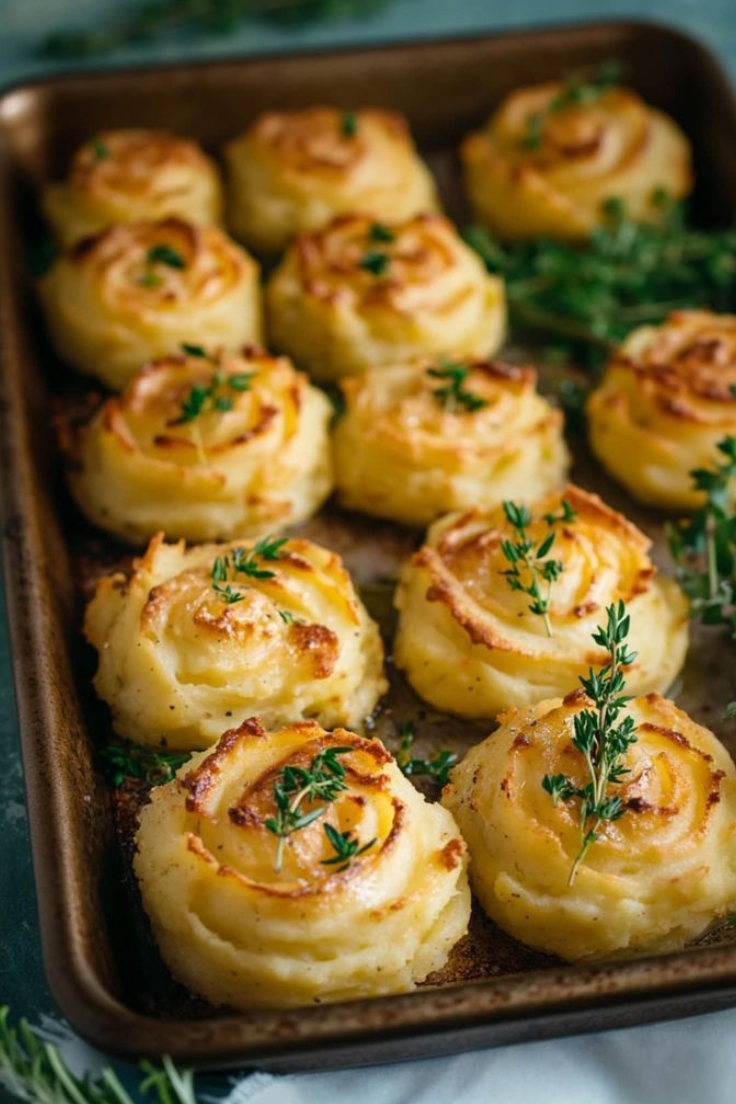
Duchess Potatoes are buttery piped mashed potato rosettes with golden crispy edges, the elegant, make-ahead side your holiday table deserves.
🧂 Ingredients
- 2 1/2 lb (1.13 kg) russet or Yukon Gold potatoes, peeled and cut into 1-inch chunks
- 6 tbsp (85 g) unsalted butter, cut into cubes, plus more for greasing
- 3 large egg yolks
- 1/3 cup (80 ml) heavy cream, warmed
- 1 tsp fine sea salt, plus more for the boiling water
- 1/4 tsp freshly grated nutmeg
- 1/4 tsp white pepper
- 1/8 tsp baking powder (optional)
📋 Instructions
- 1Boil the potatoes — Cover the potato chunks with cold water by 1 inch, add 1 tablespoon salt, and bring to a boil. Simmer at a gentle bubble for 15 to 18 minutes, until a knife slides in with zero resistance. Drain well in a colander.
- 2Dry the mash — Return the drained potatoes to the dry pot over low heat (about 200F / 95C) for 2 minutes, stirring, until the surface looks matte and no steam rises. This is the single biggest step for lump-free, non-watery rosettes.
- 3Rice and enrich — Press the hot potatoes through a ricer or food mill into a bowl, then beat in the butter cubes, warm cream, salt, nutmeg, white pepper, and baking powder until glossy. Stir in the egg yolks one at a time just until combined, the mixture should be thick enough to hold a stiff peak.
- 4Heat the oven — Preheat to 425F (220C) with a rack in the upper-middle position. Line two sheet pans with parchment paper.
- 5Pipe the rosettes — Fit a piping bag with a large open-star tip and fill it with the warm potato mixture. Pipe 2-inch rosettes about 1 1/2 inches apart, pressing down and releasing upward to finish each with a peak.
- 6Chill to set — Refrigerate the piped rosettes for 20 minutes so they firm up. They should feel cool and hold their shape when you nudge one with a fingertip.
- 7Bake until golden — Bake one pan at a time for 22 to 26 minutes at 425F (220C), until the ridges are deep golden brown and the tips are crisp, rotating the pan at the 15-minute mark. The centers should read about 200F (95C) on an instant-read thermometer.
- 8Serve hot — Slide the rosettes onto a warm platter with an offset spatula and serve immediately, while the edges are still crackly and the middles are pillowy.

Sofia writes about parenting and family wellness, exploring the messy, joyful reality of raising kids. She offers relatable stories and practical advice on everything from sleep training to managing screen time, always with a dose of humor.