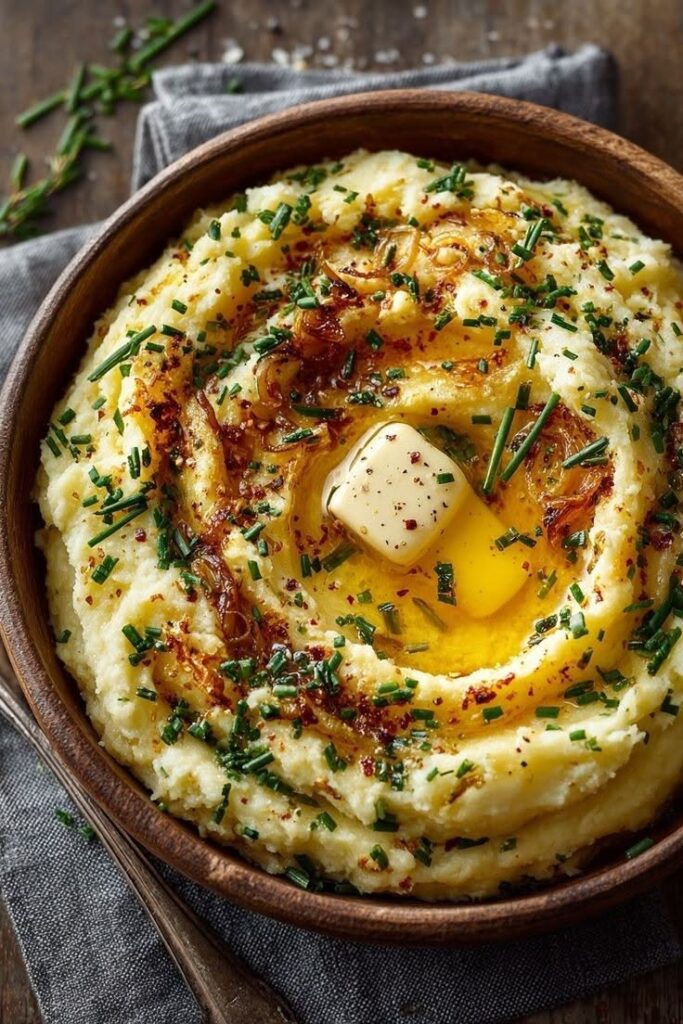
A wooden bowl of mashed potatoes is quiet food. It does not shout. It sits there, steaming, waiting for someone to take the first spoonful.
Advertisements1
The butter melts into the hot potatoes and disappears. What is left is softness, salt, and the smell of warm cream. That is the whole idea.
I keep this recipe simple on purpose. Russet potatoes, real butter, a little dairy, and a fork or potato ricer. Nothing else is needed. Less noise, more signal.
Why You'll Love This Recipe
About the Ingredients
3 lb (1.36 kg) russet or Yukon Gold potatoes, peeled and cut into 1-inch chunks
Russets turn fluffy and light; Yukon Golds stay creamier and buttery. Avoid waxy red potatoes here because they turn gluey when mashed.
1 tbsp (18 g) fine sea salt, plus more for the cooking water
Fine sea salt dissolves faster than flaky salt. If using kosher salt, use about 1 1/2 tbsp because the crystals are larger.
8 tbsp (113 g) unsalted butter, cut into cubes, plus 2 tbsp (28 g) for melting on top
European-style butter has more fat and a deeper flavor. If you only have salted butter, cut the added salt in half.
3/4 cup (180 ml) whole milk, warmed
Whole milk gives body. For a richer bowl, swap in half-and-half or a 50/50 mix of milk and heavy cream.
1/2 cup (120 g) sour cream or full-fat Greek yogurt, at room temperature
Sour cream adds tang and silkiness. Greek yogurt works as a lighter substitute but can taste slightly sharper.
2 cloves garlic, peeled and smashed (optional)
Smashed garlic perfumes the cooking water without overpowering. Skip it if you want the purest butter flavor.
2 tbsp (6 g) fresh chives, finely sliced, for garnish
Chives add color and a mild onion note. Thinly sliced green onion tops or parsley are good substitutes.
Freshly ground black pepper, to taste
Grind pepper just before serving so the oils stay bright. White pepper gives a smoother look if you prefer no specks.
Tips & Tricks
- Start potatoes in cold water, not boiling water. Cold water heats them evenly, so the outside does not soften before the center cooks through.
- Warm the milk and butter before adding them. Cold dairy shocks hot potatoes and makes the mash tighten and turn pasty.
- Mash while the potatoes are still hot. Starch firms as it cools, so work quickly once you drain them for the smoothest texture.
Pro Tips
Step-by-Step Instructions
1. Boil the potatoes
Put the potato chunks in a large pot and cover with cold water by 1 inch. Add the smashed garlic and 1 tbsp salt, then bring to a boil over high heat. Lower to a gentle simmer and cook for 18 to 22 minutes, until a knife slides in with no resistance. The water should bubble steadily, not roll violently.
2. Drain and dry
Drain the potatoes in a colander, then return them to the dry pot over low heat for 1 minute. This steams off surface water so the mash stays fluffy instead of wet. You will see the chunks look matte and slightly chalky when ready.
3. Warm the dairy
In a small saucepan over medium-low heat, warm the milk, sour cream, and 8 tbsp butter until the butter melts and the mixture is hot but not boiling, about 3 to 4 minutes. Keep it at a bare simmer around 180 F (82 C).
4. Rice the potatoes
Pass the hot potatoes through a ricer or food mill back into the pot, or mash with a potato masher until mostly smooth. Work in batches and do not stir aggressively, or the starch will turn gluey.
5. Fold in the butter
Pour the warm dairy over the potatoes in three additions, folding gently with a spatula after each. The mash will loosen and turn glossy. Stop as soon as it looks silky; overmixing is the enemy here.
6. Season and taste
Fold in the remaining 2 tbsp butter, then season with salt and black pepper. Taste and adjust. The potatoes should taste buttery first, then lightly salty, with a clean finish.
7. Serve in a wooden bowl
Spoon the mash into a warmed wooden bowl, smooth the top with the back of a spoon, and scatter chives over it. Serve right away while the butter is still melting at the edges.
Delicious Variations
Roasted Garlic Mash
Roast a whole head of garlic at 400 F (204 C) for 40 minutes, then squeeze the soft cloves into the dairy before folding.
Brown Butter Sage Mash
Cook 4 tbsp butter with 8 sage leaves until the milk solids turn golden at 300 F (149 C), about 4 minutes, then drizzle over the bowl.
Cheddar and Chive Mash
Fold in 1 cup (113 g) sharp cheddar while the potatoes are hot, then finish with extra chives for a pub-style side.
How to Store Creamy Mashed Potatoes with Butter
Refrigerator
Store in an airtight container for up to 4 days. Press plastic wrap directly onto the surface to keep a skin from forming.
Freezer
Freeze in a freezer-safe bag for up to 2 months. Thaw overnight in the refrigerator before reheating, since dairy can separate if thawed quickly.
Reheating
Reheat gently in a saucepan over low heat with a splash of milk, stirring until loose and hot. Avoid the microwave on high, which can make the mash rubbery.
Frequently Asked Questions
Q: Why do my mashed potatoes turn gluey?
Gluey potatoes come from overworking the starch, usually with an electric mixer or a blender. Use a ricer, food mill, or hand masher, and fold the dairy in gently. Stop as soon as the texture looks smooth.
Q: Can I make mashed potatoes ahead of time?
Yes, you can make them up to 4 hours ahead and keep them warm in a covered bowl set over simmering water. Stir in a splash of warm milk before serving to bring back the silky texture. For longer storage, refrigerate and reheat gently on the stove.
Q: What are the best potatoes for mashing?
Russets give the fluffiest, lightest mash, while Yukon Golds deliver a creamier, buttery result. Both work well in this recipe. Avoid waxy potatoes like red bliss, which stay firm and can turn pasty when mashed.
Q: How much butter should I use per pound of potatoes?
A good rule is 2 to 3 tablespoons of butter per pound of potatoes, plus extra for melting on top. This recipe uses about 3 1/3 tablespoons per pound, which gives a rich but balanced bowl. Adjust up if you want a more decadent finish.
Q: Can I use milk alternatives in mashed potatoes?
Yes, oat milk and soy milk work best because they have enough fat and body to keep the mash creamy. Almond milk is thinner and can make the potatoes taste slightly watery. Add a little extra butter to compensate.
Make this bowl tonight and let the butter do the talking. Serve it beside roast chicken, braised short ribs, or simply with a spoon. When the bowl comes back empty, you will know it worked. Less noise, more signal.
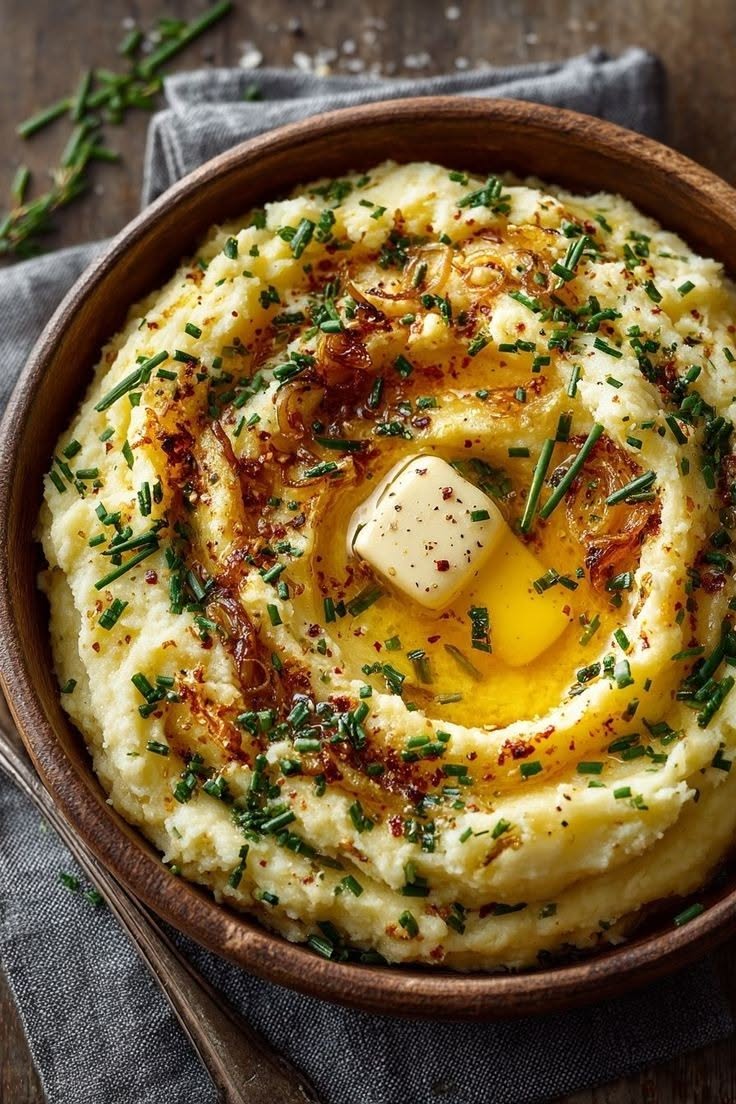
Creamy Mashed Potatoes with Butter
Creamy Mashed Potatoes with Butter are fluffy, rich, and ready in 50 minutes, a foolproof side dish that turns any dinner into a cozy, memorable meal.
🧂 Ingredients
- 3 lb (1.36 kg) russet or Yukon Gold potatoes, peeled and cut into 1-inch chunks
- 1 tbsp (18 g) fine sea salt, plus more for the cooking water
- 8 tbsp (113 g) unsalted butter, cut into cubes, plus 2 tbsp (28 g) for melting on top
- 3/4 cup (180 ml) whole milk, warmed
- 1/2 cup (120 g) sour cream or full-fat Greek yogurt, at room temperature
- 2 cloves garlic, peeled and smashed (optional)
- 2 tbsp (6 g) fresh chives, finely sliced, for garnish
- Freshly ground black pepper, to taste
📋 Instructions
- 1Boil the potatoes — Put the potato chunks in a large pot and cover with cold water by 1 inch. Add the smashed garlic and 1 tbsp salt, then bring to a boil over high heat. Lower to a gentle simmer and cook for 18 to 22 minutes, until a knife slides in with no resistance. The water should bubble steadily, not roll violently.
- 2Drain and dry — Drain the potatoes in a colander, then return them to the dry pot over low heat for 1 minute. This steams off surface water so the mash stays fluffy instead of wet. You will see the chunks look matte and slightly chalky when ready.
- 3Warm the dairy — In a small saucepan over medium-low heat, warm the milk, sour cream, and 8 tbsp butter until the butter melts and the mixture is hot but not boiling, about 3 to 4 minutes. Keep it at a bare simmer around 180 F (82 C).
- 4Rice the potatoes — Pass the hot potatoes through a ricer or food mill back into the pot, or mash with a potato masher until mostly smooth. Work in batches and do not stir aggressively, or the starch will turn gluey.
- 5Fold in the butter — Pour the warm dairy over the potatoes in three additions, folding gently with a spatula after each. The mash will loosen and turn glossy. Stop as soon as it looks silky; overmixing is the enemy here.
- 6Season and taste — Fold in the remaining 2 tbsp butter, then season with salt and black pepper. Taste and adjust. The potatoes should taste buttery first, then lightly salty, with a clean finish.
- 7Serve in a wooden bowl — Spoon the mash into a warmed wooden bowl, smooth the top with the back of a spoon, and scatter chives over it. Serve right away while the butter is still melting at the edges.

Kenji explores technology and digital minimalism, helping readers declutter their digital lives and focus on what matters. He writes about app selection, notification management, and creating healthy tech habits, based on his own experiments with unplugging.