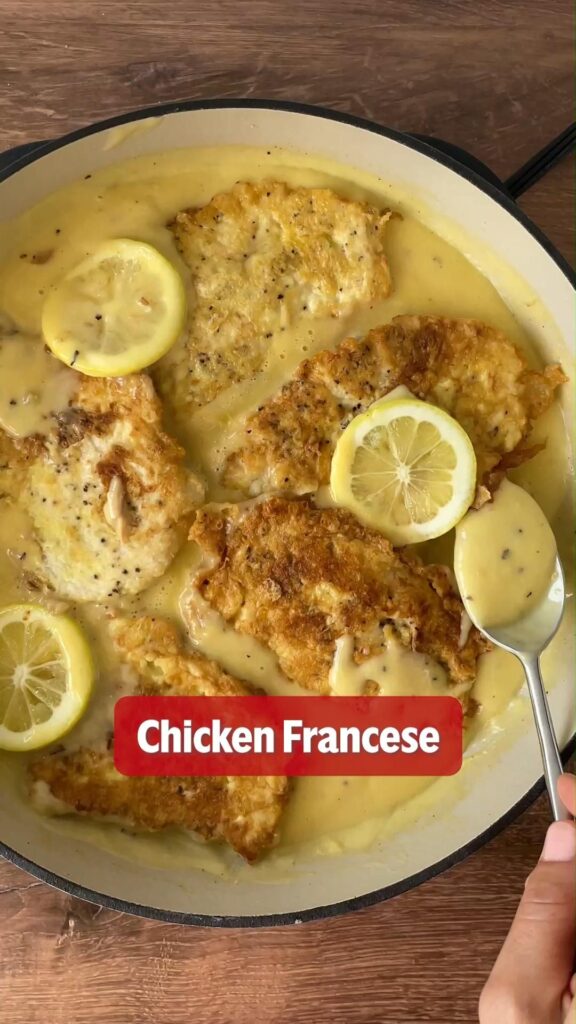
The first time I tasted chicken Francese, I was sitting in a tiny Italian-American trattoria in Brooklyn, watching a waiter swirl lemon and butter into a pan until the sauce turned the color of pale sunlight. That glossy, tangy, egg-washed cutlet changed how I thought about chicken forever. This creamy version is my love letter to that night, one I now make on weeknights when I want something that feels like a celebration but takes barely half an hour.
Advertisements1
Francese is Italian-American cooking at its most generous, a dish built on the immigrant instinct to take humble ingredients, eggs, flour, butter, lemon, and treat them with real respect. The classic is bright and lean; my version folds in a touch of cream to make the sauce cling to every crumb of the golden crust. It is the kind of food that turns a Tuesday into something you remember.
I have cooked this in cramped city kitchens and in rentals with one dull knife, and it always delivers. The technique is simple, but the details matter, so I have written every temperature and every sensory cue so your first attempt lands like your tenth.
Why You'll Love This Recipe
About the Ingredients
6 thin boneless, skinless chicken cutlets (about 1.5 lb / 680g total)
Look for cutlets no thicker than 1/2 inch, or butterfly and pound two large breasts thin yourself. A meat mallet or the bottom of a heavy skillet works fine if you do not own a pounder.
1/2 cup (60g) all-purpose flour
This coats the cutlets and thickens the pan sauce. For a gluten-free version, swap in an equal amount of fine white rice flour or a 1-to-1 gluten-free blend.
3 large eggs
Beaten eggs give Francese its signature tender, souffle-like crust. If you are short on eggs, 3/4 cup of beaten egg substitute works, but the coating will be slightly less puffy.
1/2 cup (50g) finely grated Parmigiano-Reggiano
Freshly grate it yourself; pre-shredded cheese is coated in starch and will not melt smoothly into the coating. Pecorino Romano is a sharper, saltier stand-in if you prefer.
4 tablespoons (56g) unsalted butter, divided
Butter builds the sauce and finishes it glossy. Keep it cold and add it in pieces at the end so the sauce emulsifies instead of breaking.
2 tablespoons olive oil
The oil raises butter's smoke point so the cutlets brown without burning. Any neutral high-heat oil, like avocado or grapeseed, works too.
1 cup (240ml) low-sodium chicken broth
Broth is the backbone of the sauce. Use a good-quality unsalted or low-sodium stock so you control the salt; vegetable broth makes a fine vegetarian-leaning swap.
1/2 cup (120ml) heavy cream
Cream is what makes this version creamy rather than classic. For a lighter sauce, use half-and-half, but simmer it gently so it does not curdle.
1/4 cup (60ml) fresh lemon juice (about 2 lemons)
Fresh juice is non-negotiable here; bottled tastes flat and metallic. Meyer lemons give a softer, floral tang if you can find them in season.
2 garlic cloves, finely minced
Garlic adds a savory base note. If you are garlic-shy, use one clove or a pinch of garlic powder stirred in with the broth.
2 tablespoons chopped fresh flat-leaf parsley, plus more for serving
Parsley brightens the plate and cuts the richness. Basil or tarragon are lovely alternatives if you want a different herbal note.
Kosher salt and freshly cracked black pepper, to taste
Season every layer, the chicken, the flour, and the sauce. Flaky sea salt sprinkled at the table adds a final pop of texture.
Tips & Tricks
Do not crowd the pan
Fry the cutlets in batches so they sear golden instead of steaming; overcrowding drops the oil temperature and leaves the crust pale and greasy.
Whisk the sauce off the heat
Add the cream and lemon juice with the pan pulled off the burner, then return it to low heat, which keeps the sauce silky instead of grainy.
Pat the chicken bone-dry
Moisture on the surface prevents browning, so blot the cutlets with paper towels before dredging and the coating will cling and crisp properly.
Taste before you salt
Parmesan, broth, and butter all carry salt, so season the finished sauce only after tasting to avoid an over-salted pan.
Pro Tips
Step-by-Step Instructions
1. Pound and season
Place each cutlet between two sheets of plastic wrap and pound to an even 1/4 inch (6mm). Season both sides generously with kosher salt and black pepper, then let them sit at room temperature for 10 minutes while you set up the dredging station.
2. Set up dredging
Spread the flour on a shallow plate and season it with a pinch of salt and pepper. In a second shallow dish, beat the eggs with the grated Parmigiano-Reggiano until fully combined. Pat the cutlets dry one more time with paper towels so the coating will adhere.
3. Dredge the cutlets
Dip each cutlet into the flour, shaking off the excess, then press it into the egg mixture so it is fully coated. Set the coated cutlets on a wire rack and let them rest for 5 minutes, which helps the coating set and stay put in the pan.
4. Fry until golden
Heat 1 tablespoon olive oil and 1 tablespoon butter in a large skillet over medium-high heat, about 375F (190C), until the butter foams. Fry the cutlets in batches for 3 to 4 minutes per side until deeply golden brown and the internal temperature reaches 165F (74C). Transfer to a paper-towel-lined plate and repeat with the remaining oil, butter, and cutlets.
5. Build the sauce base
Pour off all but 1 tablespoon of fat from the skillet and lower the heat to medium, about 300F (150C). Add the garlic and cook for 30 seconds until fragrant but not browned, then pour in the chicken broth and simmer for 3 to 4 minutes, scraping up the browned bits, until reduced by about a third.
6. Make it creamy
Pull the pan off the heat and whisk in the heavy cream and lemon juice. Return it to low heat, about 250F (120C), and simmer gently for 2 to 3 minutes until the sauce thickens enough to coat the back of a spoon, with lazy bubbles at the edges.
7. Finish and serve
Off the heat, whisk in the remaining 3 tablespoons cold butter one piece at a time until the sauce is glossy and velvety. Stir in the parsley, taste for salt and pepper, then spoon the sauce over the cutlets and serve immediately with extra parsley.
Delicious Variations
Chicken Francese Piccata
Add 1 tablespoon of capers and 1/4 cup of dry white wine to the sauce for a briny, sharper twist.
Mushroom Cream Francese
Saute 8 ounces of sliced cremini mushrooms after the garlic and let them simmer in the sauce for an earthy, heartier version.
Lemon-Artichoke Francese
Fold in a drained 14-ounce can of quartered artichoke hearts with the cream for a brasserie-style plate.
How to Store Creamy Chicken Francese
Refrigerator
Store leftovers in an airtight container in the refrigerator for up to 3 days, keeping the sauce and cutlets together so the chicken stays moist.
Freezer
Freeze the cutlets and sauce in a freezer-safe container for up to 2 months; the crust will soften, so this is best for future pasta tosses rather than a crisp presentation.
Reheating
Reheat gently in a covered skillet over low heat, about 250F (120C), for 5 to 7 minutes, adding a splash of broth to loosen the sauce without toughening the chicken.
Frequently Asked Questions
Q: What is the difference between chicken Francese and chicken piccata?
Chicken Francese is dredged in flour and egg before frying, giving it a puffy golden crust, while piccata skips the egg and leans on capers and wine. Francese sauce is also typically a touch creamier and more lemon-forward in this version.
Q: Can I make creamy chicken Francese ahead of time?
You can fry the cutlets up to a day ahead and refrigerate them, then make the sauce fresh right before serving. Reheat the chicken in a low oven while you whisk the sauce so the crust does not go soggy.
Q: Why did my sauce turn out grainy or broken?
The sauce breaks when the cream or lemon juice is added over high heat or too quickly, so pull the pan off the burner first. Whisking in cold butter at the very end also helps the sauce emulsify into a smooth, glossy finish.
Q: Can I use chicken breasts instead of cutlets?
Yes, buy two large boneless breasts and slice each horizontally into three thin cutlets, then pound them to 1/4 inch. Even thickness is what matters most for tender, evenly cooked chicken.
Q: Is chicken Francese served with pasta?
It is delicious over angel hair, linguine, or mashed potatoes, and many restaurants serve it alongside a simple green salad. Spoon plenty of the creamy lemon sauce over whatever you choose so nothing goes dry.
Cook this creamy chicken Francese on a night when you want the kitchen to smell like lemon, butter, and possibility, and watch everyone at the table go quiet in the best way. Serve it with crusty bread to swipe the pan, and tell me how it turned out. Go, see, and connect.
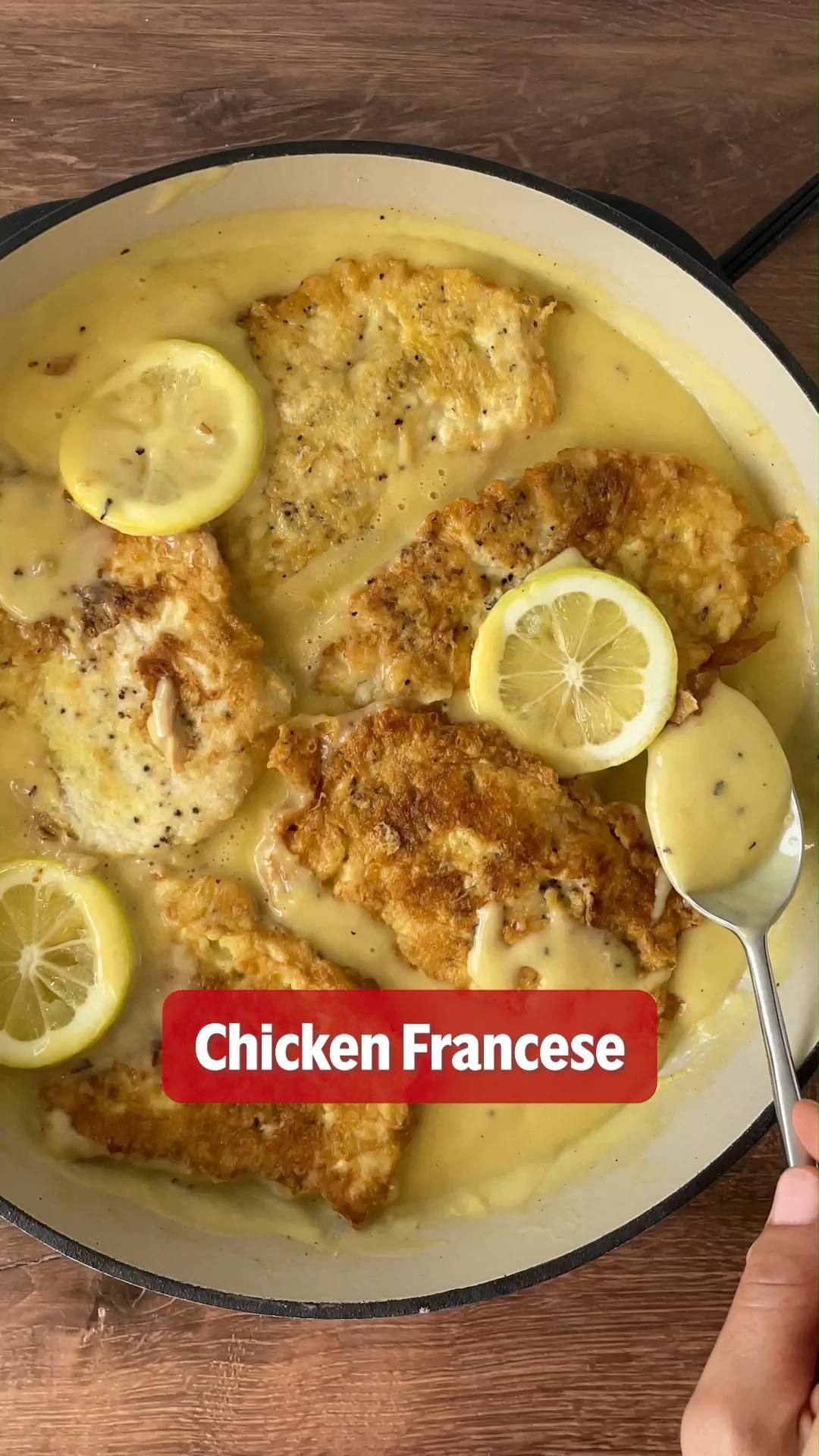
Creamy Chicken Francese
Creamy Chicken Francese turns golden pan-fried cutlets into a silky lemon-butter sauce for a 30-minute dinner that tastes restaurant-worthy.
🧂 Ingredients
- 6 thin boneless, skinless chicken cutlets (about 1.5 lb / 680g total)
- 1/2 cup (60g) all-purpose flour
- 3 large eggs
- 1/2 cup (50g) finely grated Parmigiano-Reggiano
- 4 tablespoons (56g) unsalted butter, divided
- 2 tablespoons olive oil
- 1 cup (240ml) low-sodium chicken broth
- 1/2 cup (120ml) heavy cream
- 1/4 cup (60ml) fresh lemon juice (about 2 lemons)
- 2 garlic cloves, finely minced
- 2 tablespoons chopped fresh flat-leaf parsley, plus more for serving
- Kosher salt and freshly cracked black pepper, to taste
📋 Instructions
- 1Pound and season — Place each cutlet between two sheets of plastic wrap and pound to an even 1/4 inch (6mm). Season both sides generously with kosher salt and black pepper, then let them sit at room temperature for 10 minutes while you set up the dredging station.
- 2Set up dredging — Spread the flour on a shallow plate and season it with a pinch of salt and pepper. In a second shallow dish, beat the eggs with the grated Parmigiano-Reggiano until fully combined. Pat the cutlets dry one more time with paper towels so the coating will adhere.
- 3Dredge the cutlets — Dip each cutlet into the flour, shaking off the excess, then press it into the egg mixture so it is fully coated. Set the coated cutlets on a wire rack and let them rest for 5 minutes, which helps the coating set and stay put in the pan.
- 4Fry until golden — Heat 1 tablespoon olive oil and 1 tablespoon butter in a large skillet over medium-high heat, about 375F (190C), until the butter foams. Fry the cutlets in batches for 3 to 4 minutes per side until deeply golden brown and the internal temperature reaches 165F (74C). Transfer to a paper-towel-lined plate and repeat with the remaining oil, butter, and cutlets.
- 5Build the sauce base — Pour off all but 1 tablespoon of fat from the skillet and lower the heat to medium, about 300F (150C). Add the garlic and cook for 30 seconds until fragrant but not browned, then pour in the chicken broth and simmer for 3 to 4 minutes, scraping up the browned bits, until reduced by about a third.
- 6Make it creamy — Pull the pan off the heat and whisk in the heavy cream and lemon juice. Return it to low heat, about 250F (120C), and simmer gently for 2 to 3 minutes until the sauce thickens enough to coat the back of a spoon, with lazy bubbles at the edges.
- 7Finish and serve — Off the heat, whisk in the remaining 3 tablespoons cold butter one piece at a time until the sauce is glossy and velvety. Stir in the parsley, taste for salt and pepper, then spoon the sauce over the cutlets and serve immediately with extra parsley.

Aisha writes about travel and cultural immersion, sharing stories and tips from her journeys to off-the-beaten-path destinations. She emphasizes respectful tourism, budget-friendly adventures, and the importance of connecting with local communities.